Pakistan grapples with mounting water insecurity, the debate over large dams has re-emerged at the forefront of national discourse. With climate volatility increasing and seasonal rainfall patterns shifting, experts warn that the country’s survival hinges on its ability to store and regulate water — and that means building more dams.
The Case Against Dams:
Critics of mega-dams argue that the decades-long push for large water reservoirs has been misleading, driven more by lobbying and contractor interests than sound, scientific planning. Billions have been poured into dam construction, yet questions linger about their sustainability and effectiveness.
Environmental groups highlight that dams are not flood-proof. While they may control smaller floods, they can exacerbate larger ones by narrowing river channels and increasing downstream pressure. Another major concern is sedimentation: many dams silt up within 50 years, dramatically reducing their storage capacity.
Alternatives to dams, such as restoring aquifers, wetlands, and river floodplains, offer promising, nature-based solutions. Research suggests these natural systems could store up to 500 million acre-feet (MAF) of water — potentially rivaling the capacity of large reservoirs without the environmental costs.
The push for dams is often seen as a quick fix, but the reality is much more complicated. There are other effective, less harmful solutions that deserve real attention.
Why Dams Still Matter:
Despite the criticisms, water experts, engineers, and policy-makers argue that the anti-dam narrative oversimplifies Pakistan’s unique water crisis. For a country heavily dependent on the Indus River and marked by highly seasonal rainfall, dams serve a function that cannot be entirely replaced.
Over-extraction from aquifers has already led to falling groundwater tables, salinity, and contamination, particularly in Punjab and Sindh. Ironically, large surface reservoirs can help recharge these same aquifers through managed releases and seepage, improving long-term groundwater sustainability.
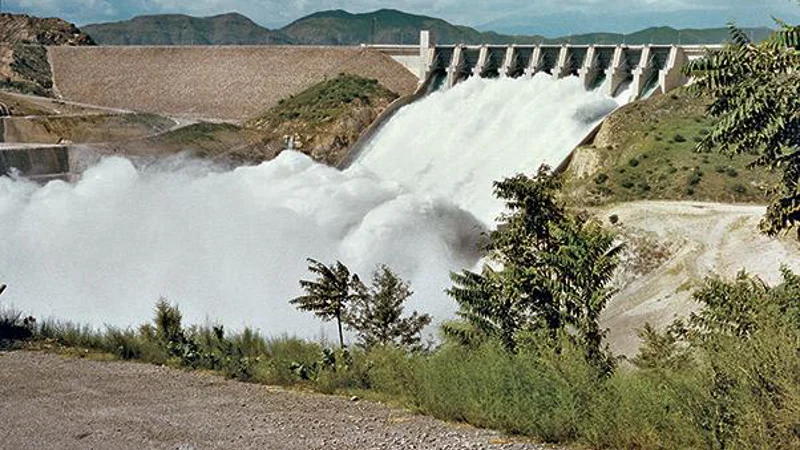
Sedimentation is a real challenge and manageable. With modern engineering techniques like flushing, bypass tunnels, dredging, and watershed management, the operational life of major dams like Tarbela and Mangla has already been extended significantly.
Energy security is another critical factor. Hydropower from dams provides a clean, domestic, and reliable source of electricity — essential for a country facing rolling blackouts and rising fuel import costs. Unlike solar and wind, hydropower can provide both base-load energy and peak-demand support, making it a key pillar of climate-resilient infrastructure.
Striking a Balance:
While nature-based solutions have undeniable value in enhancing resilience and ecological health, experts insist they must complement, not replace, large-scale infrastructure.
Expert says, Rejecting dams altogether is not realistic, Pakistan needs is an integrated approach — large dams for strategic storage and energy, and wetlands, aquifers, and floodplains for resilience and environmental balance.
A National Imperative:
Pakistan’s water challenge is not a distant threat — it’s an urgent reality. With per capita water availability falling below 1,000 cubic meters, the country is already classified as water-stressed. As monsoon variability increases and population growth continues, the need for strategic water storage becomes existential.
In this context, large dams are not just concrete structures; they are vital instruments of survival. The debate must move beyond ideology and focus on a balanced, science-based approach to ensure Pakistan’s water, food, and energy security in the decades to come.