The Organisation for Economic Co-operation and Development (OECD) has lowered its global growth forecast, warning that the economic fallout from the ongoing U.S.-Iran conflict could worsen significantly if disruptions in the Gulf region continue and a lasting peace agreement is not reached soon.
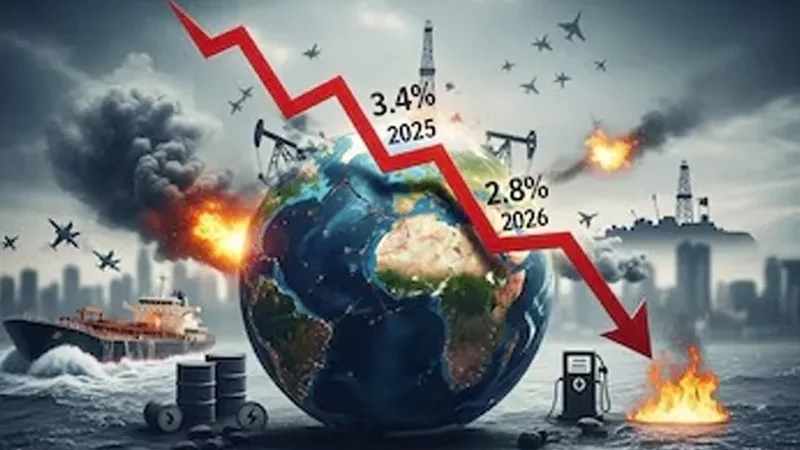
In its June Economic Outlook report, the OECD projected global economic growth to slow from 3.4% in 2025 to 2.8% in 2026. A modest recovery to 3.1% is expected in 2027, but only if current pressures on energy markets begin to ease by the middle of next year.
The organisation cautioned that its forecast is based on a scenario where disruptions remain temporary, tensions gradually ease, and shipping activity through the Strait of Hormuz returns to normal after a peace settlement.
Stefano Scarpetta, the OECD’s chief economist, warned that a prolonged crisis could have far more damaging consequences for the global economy. If disruptions to shipping routes and Gulf energy infrastructure continue into 2027, global growth could slow sharply to 2.1% in 2026 and fall further to 1.8% the following year.
Such a decline, he warned, would leave several economies vulnerable to recession or dangerously close to contraction.
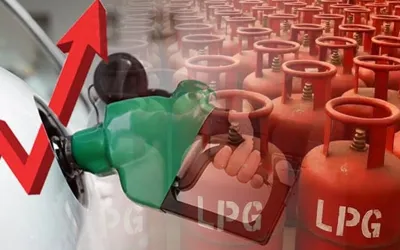
The OECD report highlighted the growing economic strain caused by instability in the Strait of Hormuz, one of the world’s most critical oil transit routes. Damage to energy infrastructure across the Gulf has already driven up oil and gas prices, while increasing the cost of fertilizers and other industrial inputs used in manufacturing and agriculture.
The report noted that even if the conflict is resolved, the economic consequences are likely to persist for some time, with supply chains and commodity markets expected to take longer to stabilize.
Scarpetta said a durable peace agreement would not only help restore stability in the region but also reduce uncertainty in global markets and ease pressure on economies already struggling with inflation and slowing growth.
“The longer the disruptions last, the greater the economic and social costs become,” the report said.
Under the OECD’s worst-case scenario, global inflation could rise by 0.4 percentage points in 2026 and by 1.3 percentage points in 2027, creating fresh challenges for central banks already balancing weak growth with inflationary pressure.
The report also warned that unemployment could rise, while business investment may weaken significantly particularly in energy-intensive sectors, including advanced technologies and artificial intelligence.
Developing countries are expected to face the heaviest burden, as many rely heavily on imported energy and food, have limited fiscal capacity, weaker currencies and fragile social safety systems.
The OECD said the crisis has once again exposed how vulnerable the global economy remains to disruptions at a single strategic chokepoint. It stressed the need for stronger supply chains, greater energy diversification and long-term investment aimed at reducing dependence on fossil fuel imports.
In the short term, the organisation suggested that emergency demand-control measures and coordinated use of strategic energy reserves could help soften the impact of supply disruptions.
However, it warned that longer-term stability would depend on accelerating the transition toward more secure and sustainable energy sources.