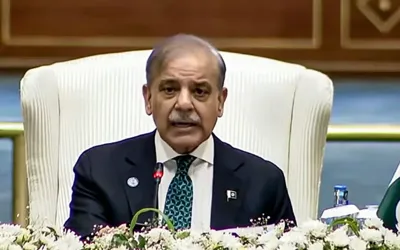
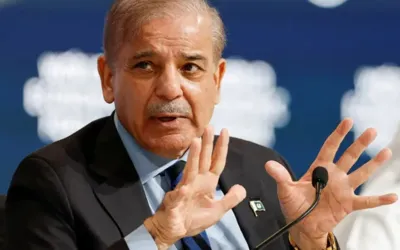
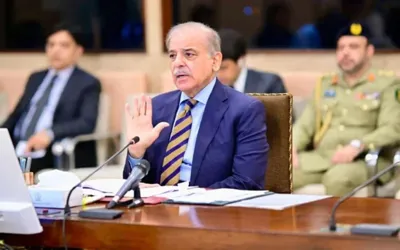
ANTALYA: Prime Minister Shehbaz Sharif has urged the international community to strengthen economies and provide energy to households without pushing people into poverty or harming the planet.
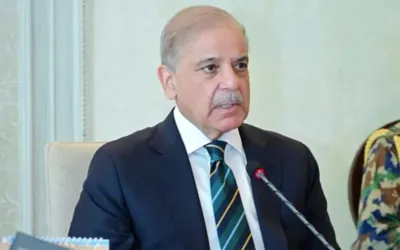
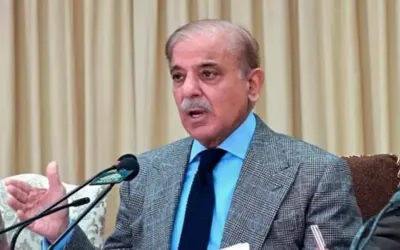
Addressing a high-level session titled “Green Energy Transition by 2035: Powering the Future” on the sidelines of the 31st United Nations Climate Change Conference (COP31) on Wednesday, the prime minister reaffirmed Pakistan's commitment to sustainable and clean energy.
She presented Pakistan's roadmap for transitioning towards clean energy and called for increased international financial support and affordable technology to help developing countries achieve their climate targets.
Highlighting Pakistan's progress, Shehbaz said clean energy sources now account for approximately 55% of the country's overall energy mix.
He also told participants that, before departing for Antalya, he had inaugurated a key component of Pakistan's seventh nuclear power plant, which would add 1,200 megawatts of clean electricity to the national grid.
Pakistan targets 30% electric vehicles by 2030
The prime minister said Pakistan's recently introduced auto policy had set a target of converting 30% of new vehicle sales to electric vehicles by 2030.
He said incentives, including lower tariffs, would be offered to encourage the adoption of electric vehicles.
Shehbaz added that all buses and motorcycles purchased by the government in the future would be electric-powered.
He noted that, for the first time, more than one out of every 10 motorcycles sold in Pakistan this year was electric.
Pakistan needs $188 billion for clean energy transition
The prime minister said Pakistan's transition towards green energy was progressing rapidly but required sustained financial support to achieve its targets.
He estimated that Pakistan would need approximately $138 billion by 2035 for low-carbon electricity generation projects, along with an additional $50 billion to replace coal-fired power generation with solar energy.
Highlighting the financial challenges facing developing countries, Shehbaz said substantial investment was required to expand electricity transmission networks, establish reliable energy storage systems and make modern technologies affordable.
He stressed that economies already burdened by heavy debt could not bear these costs alone.
The prime minister urged international partners to provide concessional financing and facilitate the transfer of affordable technologies, saying ambitious clean energy targets could only be achieved through collective efforts and timely financial assistance.
He said Pakistan's 35% target for 2035 could only be achieved if financial resources, concessional investment and technology transfers matched the country's ambitions.
Shehbaz also called for a development model that balanced economic growth with environmental protection, enabling countries to meet their energy needs without damaging the planet.
"Let us resolve to power our economies without pushing our people into poverty and light up our homes without darkening the planet," he said.
The prime minister reiterated Pakistan's commitment to advancing its clean energy agenda and contributing to global efforts for sustainable development and addressing climate change.