ISLAMABAD: Pakistan's finance minister said Monday the country is shifting from economic stabilization to investment- and export-driven growth, touting three credit rating upgrades and a successful return to international bond markets as evidence of renewed investor confidence.
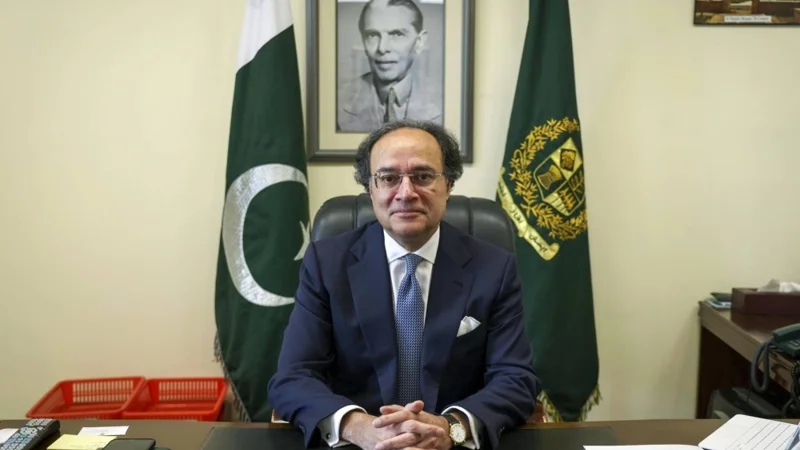
Sen. Muhammad Aurangzeb, addressing the 9th Leaders in Islamabad Business Summit 2026 by video link and later hosting an investment roundtable in London, outlined five priorities guiding the government's economic agenda: making macroeconomic stability permanent, transitioning to sustainable growth, continuing structural reforms, moving from aid to trade and investment, and positioning Pakistan in emerging sectors including blockchain and Web 3.0.
"Pakistan is open for business with renewed interest from international investors," Aurangzeb told financial executives in London. He said Pakistan has completed all International Monetary Fund reviews on schedule, which he said were validated by three rating upgrades.
The finance minister said Pakistan's economy has improved, with large-scale manufacturing showing gains and strong remittance inflows and IT export growth supporting the external account. He said GDP grew about 3.7% last fiscal year, and the State Bank of Pakistan projects 3.5% to 4.5% growth this year.
Aurangzeb pointed to Pakistan's recent issuance of $3 billion in international bonds after a four-year absence from global capital markets, saying investor orders were nearly twice the amount sought, with strong participation from Asian investors.
He said the government is focused on fiscal consolidation, noting that Rs6.9 trillion was spent on debt servicing last fiscal year against a budgeted Rs8.2 trillion. He said tax authorities' discretionary powers have been eliminated and no additional taxes have been levied on salaried workers, though he acknowledged the economy faced setbacks from last year's nationwide flooding and Middle East conflict that raised global oil prices.
Despite a policy rate of 11.5%, exporters continue to receive refinancing at 4.5% to boost competitiveness, he said. The government also is pursuing state-owned enterprise reforms and privatization, along with energy sector changes and measures to improve financial transparency and ease of doing business.
Aurangzeb said expanding the tax base and enforcement is necessary for growth, and that structural reforms aim to enable the private sector. He described the reform agenda as central to making economic stability durable.
The London roundtable was attended by State Bank of Pakistan Gov. Jamil Ahmed, Finance Minister Advisor Khurram Schehzad and Pakistan High Commissioner to the U.K. Tipu Usman, along with representatives of leading global financial management firms. During an interactive session, Aurangzeb took questions on Pakistan's economy, investment climate, partnerships with international organizations and sector opportunities.
The finance minister said Pakistan must combine its young, technology-enabled workforce with an enabling policy and investment environment to participate in higher-value segments of the global economy.