ISLAMABAD: Pakistan’s top military spokesperson has rejected speculation surrounding its new defense pact with Saudi Arabia and Türkiye, saying the agreement is designed for collective defense and regional stability, not confrontation or military expansion.
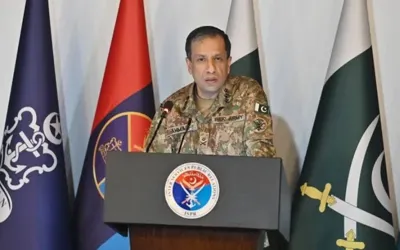
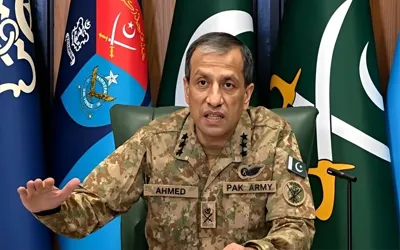
Inter-Services Public Relations Director General Lt. Gen. Ahmed Sharif Chaudhry made the remarks in an interview with Al Arabiya, explaining Pakistan’s position on the Makkah Joint Defense Agreement, its potential response to an attack on any member, ties with China and Islamabad’s role in regional conflicts.
Chaudhry said the agreement between Pakistan, Saudi Arabia and Türkiye contains no offensive or interventionist agenda.
He said the three countries maintain independent relationships with other states and international alliances, making the agreement a complementary defense arrangement rather than an alternative to existing partnerships.
According to the military spokesperson, the pact is centered on nonaggression, noninterference and efforts to promote peace and stability in the region.
Asked what Pakistan would do if one of the three countries came under attack, Chaudhry said the operational details of defense agreements are not disclosed publicly.
He said the leadership of the three countries would jointly assess the situation and determine an appropriate response if such circumstances arose.
The agreement includes a collective-defense provision under which an armed attack against one member is considered an attack against all three.
China ties will remain unchanged
Chaudhry also dismissed concerns that the agreement could affect Pakistan’s longstanding relationship with China.
He said China and other major powers understand the historical ties between Pakistan, Saudi Arabia and Türkiye.
The three countries also maintain strong relations with China, he said, adding that the defense pact is intended to contribute to regional stability rather than alter existing strategic relationships.
Chaudhry also rejected the description of the arrangement as an exclusive Islamic military bloc.
He said the agreement should instead be viewed as a regional security framework built around peace, nonaggression and collective defense.
He added that any decision to expand the arrangement would rest with the political and military leadership of the three member states.
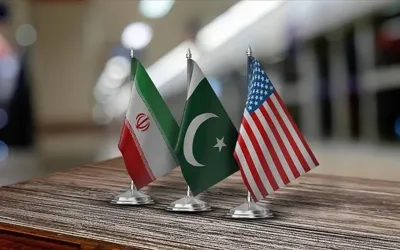
Pakistan seeks role in U.S.-Iran tensions
The military spokesperson also discussed Pakistan’s role in efforts to ease tensions between the United States and Iran.
Chaudhry said Islamabad’s involvement was driven by its stated objective of preventing further escalation and promoting regional peace.
He pointed to Pakistan’s longstanding relationship with the United States and its geographic, historical and strategic ties with Iran as factors enabling Islamabad to engage with both sides.
He said Pakistan has no direct interest in the conflict and wants disputes to be resolved through dialogue rather than military confrontation.
On India’s acquisition of missiles and advanced air defense systems, Chaudhry said New Delhi was spending heavily on modern military equipment.
He said Pakistan does not support an arms race or a regional imbalance in military power.
At the same time, he said Pakistan remains confident in its defense capabilities and that its military strength is intended to protect the country against external threats.
Turning to Afghanistan, Chaudhry said Pakistan does not seek to interfere in the country’s internal affairs but remains concerned about militant activity originating from Afghan territory.
He alleged that militant groups were using the territory for recruitment, training and cross-border attacks against Pakistan.
Pakistan has repeatedly raised concerns over attacks it says originate from Afghanistan, while Afghan authorities have rejected allegations that they allow their territory to be used against neighboring countries.
Chaudhry’s comments place the Makkah defense pact within Pakistan’s broader stated approach of strengthening national security while seeking regional stability and maintaining relations with multiple international partners.