Monday, November 23, 2026
Watch Live
UPDATED
FUEL PRICE
23-NOV-2026
PETROL
▼ -1.00 PKR
Rs. 322.00/ltr
DIESEL
▲ +2.00 PKR
Rs. 357.00/ltr
Headlines
Nvidia shares jump 30% after Jensen Huang returns as CEO Pakistan still lacks cannibalism law 15 years after Bhakkar cases Frequent hair straightener use can damage hair, experts warn Pakistan still lacks cannibalism law 15 years after Bhakkar cases Scientists discover rare genetic eye disease that quietly damages night vision Pakistan Shaheens beat India A by 48 runs in Rising Stars Asia Cup Pakistan to launch first national Diabetes Prevention and Control Programme Meta AI chief predicts superintelligence could reshape humanity by 2027 Gold prices jump Rs7800 per tola in Pakistan Hailee Steinfeld's Marvel return sends Doomsday hype soaring Australian music legend Molly Meldrum dies at 83 Field Marshal Asim Munir meets Malaysian PM Anwar Ibrahim during official defence visit Pakistan’s food industry heads to the global stage through Karachi’s 'FoodAg' 2026 expo Can vitamin B3 make your hair stronger, healthier and shinier? Hamza Ali Abbasi teases 'Jo Bachay Hain Sang Samait Lo' as Pakistan's Netflix debut Mohsin Naqvi breaks silence on minister's criticism over new provinces debate Indonesia factory blaze kills seven and leaves 50 workers missing Misbah Arshad showcases Pakistan’s Markhor at 75th Miss Universe costume show Ishaq Dar holds phone talks with Saudi counterpart on regional issues KP proposes Rs160 billion development package for projects across 37 districts PM Shehbaz Sharif set for three-day Russia visit on November 30 Nvidia shares jump 30% after Jensen Huang returns as CEO Pakistan still lacks cannibalism law 15 years after Bhakkar cases Frequent hair straightener use can damage hair, experts warn Pakistan still lacks cannibalism law 15 years after Bhakkar cases Scientists discover rare genetic eye disease that quietly damages night vision Pakistan Shaheens beat India A by 48 runs in Rising Stars Asia Cup Pakistan to launch first national Diabetes Prevention and Control Programme Meta AI chief predicts superintelligence could reshape humanity by 2027 Gold prices jump Rs7800 per tola in Pakistan Hailee Steinfeld's Marvel return sends Doomsday hype soaring Australian music legend Molly Meldrum dies at 83 Field Marshal Asim Munir meets Malaysian PM Anwar Ibrahim during official defence visit Pakistan’s food industry heads to the global stage through Karachi’s 'FoodAg' 2026 expo Can vitamin B3 make your hair stronger, healthier and shinier? Hamza Ali Abbasi teases 'Jo Bachay Hain Sang Samait Lo' as Pakistan's Netflix debut Mohsin Naqvi breaks silence on minister's criticism over new provinces debate Indonesia factory blaze kills seven and leaves 50 workers missing Misbah Arshad showcases Pakistan’s Markhor at 75th Miss Universe costume show Ishaq Dar holds phone talks with Saudi counterpart on regional issues KP proposes Rs160 billion development package for projects across 37 districts PM Shehbaz Sharif set for three-day Russia visit on November 30

From Sialkot to FIFA glory, Pakistani entrepreneur behind every FIFA football

Pakistan still plays a silent but powerful role in the FIFA World Cup

DUBAI: Every goal scored at the 2026 FIFA World Cup will be played with a ball made in Sialkot, Pakistan, a city known worldwide for football production.

Behind this success is Khawaja Masood Akhtar, a former civil engineer who once worked for Pakistan Railways and never planned a career in sports manufacturing. His company, Forward Sports Private Limited, started in 1991 with just 20 workers and one small room.

Today, it produces around 20.5 million footballs each year and has supplied official match balls for four consecutive FIFA World Cups, including the upcoming 2026 tournament.

“I never thought I would end up in football manufacturing, but I accepted the challenge,” Akhtar once said, reflecting on his unexpected journey into the industry.

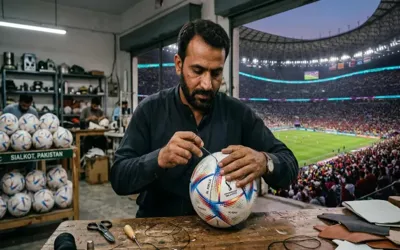
Sialkot itself plays a major role in global football supply. The city produces nearly 70% of the world footballs, from training balls to professional match balls used in major tournaments.

Around 40 million footballs are exported from Pakistan every year, and about 300,000 are made daily in Sialkot’s factories. This long tradition began more than 100 years ago when locals first repaired footballs before turning it into a major industry.

A big turning point for forward sports came in 1994 when Adidas partnered with the company. Akhtar said this changed everything and helped the business grow. Over time, the company also upgraded its technology, moving from hand stitched balls to advanced machine made and thermo bonded designs. The latest World Cup ball for 2026 even includes modern sensor technology.

“If we had not adapted to new technology, we would have been left behind,” Akhtar said about the company’s growth.
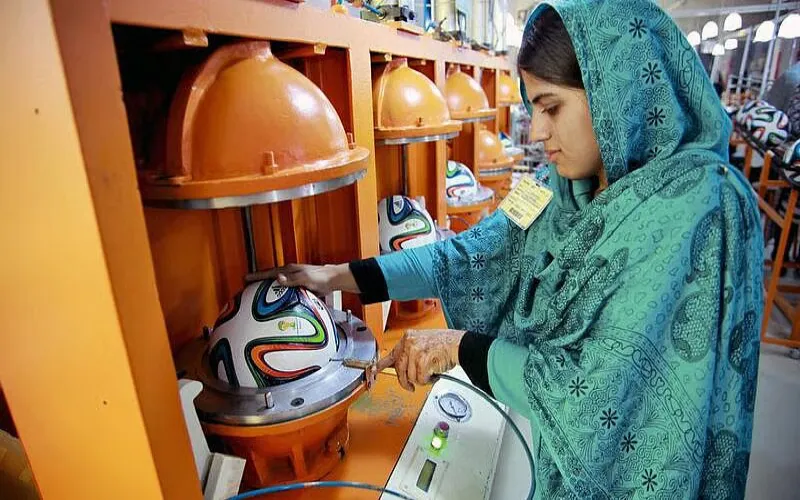
The company also employs a large number of women, who play an important role in stitching and finishing footballs. Akhtar says their contribution is a key reason behind the company success. Workers receive transport, healthcare support, and better working conditions to improve productivity and comfort.

“Women have played a major role in our success,” he said, highlighting their importance in the production process.

Despite Pakistan national football team not qualifying for major tournaments, the country still plays a silent but powerful role in the World Cup. While players compete on the field, the ball itself often comes from Sialkot, linking Pakistan to some of the biggest moments in football history.

“Success comes when you have determination and vision,” Akhtar said, summing up his journey from a railway engineer to a global football supplier.
Recommended