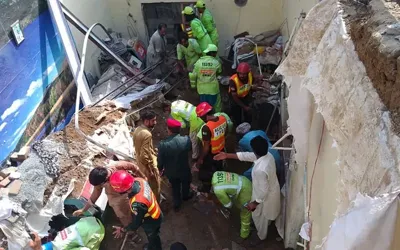
By: Hina Azam
Cannibalism is disturbing, but Pakistan has witnessed several criminal cases over the years, and few have raised questions as serious as the cannibalism cases reported in Darya Khan, a town in Bhakkar District of Punjab.
The incidents, which first came to public attention in 2011 and resurfaced in 2014, attracted international media attention.
The case involved two brothers, Mohammad Arif Ali and Mohammad Farman Ali, who were arrested in April 2011 after police discovered evidence that they had dug up graves and consumed human flesh.
According to news reports published at the time, the discovery involved the remains of a woman who had recently been buried. The brothers were later arrested, convicted and sentenced to two years in prison, along with a fine of Rs. 50,000 each.
In April 2014, police raided their residence again after receiving complaints from neighbours. This time, investigators discovered the remains of a young child who had been buried in a nearby graveyard.
Police immediately arrested one brother and later apprehended the other. The incident brought the brothers back into the national spotlight.
In June 2014, an Anti-Terrorism Court sentenced both brothers to 12 years in prison each. Their prosecution involved offences relating to the desecration of graves, destruction of property and spreading fear.
The legal void:
What is the most disturbing aspect of these incidents? It is not only the consumption of human flesh, the disrespect shown to the dead or even the murder. It is the fact that Pakistan still has no specific law against cannibalism.
In Pakistan, where burial traditions and respect for the deceased hold considerable religious and cultural importance, disturbing a grave is particularly offensive.
When these traditions are violated, the consequences extend beyond the immediate criminal incident. The psychological dimension cannot be ignored. However, it would be incorrect to automatically classify every person involved in cannibalistic behaviour as mentally ill.
Section 297 of the Pakistan Penal Code, 1860, provides protection against the desecration of burial places and indignity towards human corpses.
However, its failure to explicitly address cannibalism raises questions about the adequacy of Pakistan's existing criminal legislation. The Bhakkar incidents exposed the need to examine whether existing legal provisions are sufficient to address such extraordinary criminal conduct.
The Bhakkar incidents were not simply isolated criminal events. The recurrence of similar allegations involving the same individuals, even after imprisonment, raised serious questions about the effectiveness of Pakistan's criminal justice response.
Reports in 2018 further intensified concerns about whether existing legislation was adequate to address such conduct. The question, therefore, is not merely how these incidents occurred, but why the legal and institutional response struggled to prevent their recurrence.
Even after 15 years, no specific law against this crime exists. When the brothers are released, what evidence is there that they will not repeat this grievous offence?
Many countries, including Botswana, Nigeria and the US state of Idaho, have strict laws against this heinous act, with explicitly deterrent punishments.
Botswana specifically has Section 201A, which addresses the unlawful consumption of human flesh, body parts and human remains. Section 201B, which deals with cannibalism, makes the intentional consumption of human blood or flesh a criminal offence.
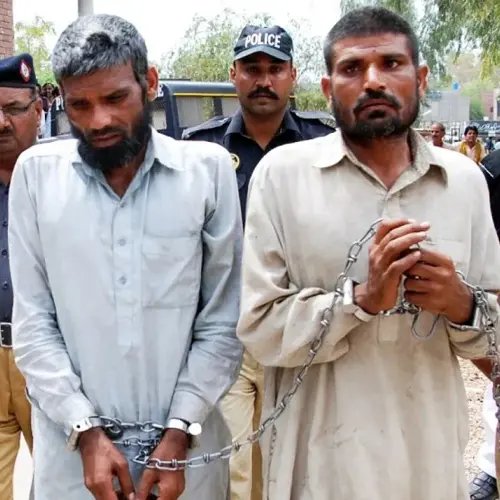
The two brothers were released from prison on July 1, 2026, and are now completely free in their hometown. These two men are walking free today because Parliament has failed to pass a specific law against cannibalism in those years.
Are the authorities waiting for another cannibalistic incident to happen? The government's failure to close this legal loophole is unacceptable.
A proper solution is needed to address such atrocities. The fact that these incidents have attracted public attention does not mean that such acts are no longer happening. What are governments actually doing? Why are authorities reluctant to address these abominable acts?
If the law cannot protect the dignity of the dead, then what exactly is it protecting? If lawmakers themselves recognised the need for punishments as severe as life imprisonment, what has prevented Pakistan from translating that recognition into effective legislation?
This raises a serious question about Pakistan's legislative system, even after 15 years, there is still no specific law addressing cannibalism. Will the government take responsibility if the Ali brothers repeat these abominable acts?