KARACHI: Residents of Pakistan's major cities, particularly Karachi, are facing a widening cost-of-living squeeze as higher petrol, diesel, LPG, and electricity charges push up the price of food and transportation day by day. Workers, retailers, and lower-income families are struggling to stretch already limited incomes.
From Karachi's crowded streets to neighborhood grocery stores and bakeries, rising fuel and energy costs are increasingly showing up in household budgets, forcing consumers to cut spending, switch brands, and, in some cases, reduce essential food purchases.
The pressure is being felt across all income groups, but the burden is particularly severe for daily-wage workers, who earn roughly Rs. 1,000 to Rs. 1,500 per day, and for low-income families whose earnings change little even as the cost of basic necessities keeps climbing.
A rise in fuel prices does not stop at the petrol station. It moves through transportation, wheat, flour, groceries, bakery products, electricity, restaurants, and retail shelves, creating a chain reaction that reaches almost every corner of urban life.
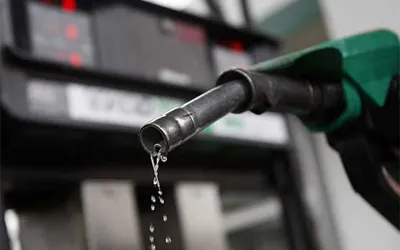
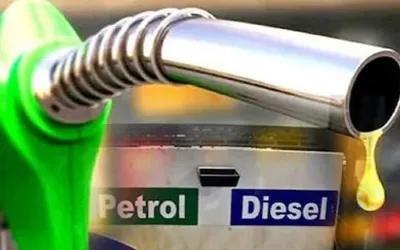
The most recent figures illustrate the scale of the pressure. According to a report, petrol prices in Pakistan rose by Rs. 34 per liter from September 10, while high-speed diesel increased by Rs. 6.02 per liter. The revised prices stood at Rs. 375.82 per liter for petrol and Rs. 403.32 per liter for high-speed diesel.
The same report cited an earlier increase on September 9, when petrol and high-speed diesel prices rose by Rs. 5.58 and Rs. 4.18 per liter, respectively. For consumers, however, the numbers on a fuel-price notification are only the beginning.
When fuel becomes more expensive, transport operators face higher operating costs. Trucks, vans, and motorcycles moving goods between farms, mills, warehouses, markets, and shops all require fuel. Retailers pay more to bring inventory into their stores, and restaurants and food businesses absorb higher transportation and energy costs before their products even reach customers.
The pressure starts with the household budget:
In an interview, one laborer, Aslam Rehman, described how his family was already struggling when petrol sold for roughly Rs. 270 to Rs. 310 per liter about six months earlier. Even then, he said, managing daily groceries, transportation, and household expenses was difficult.
Now, he said, the situation has become even harder. With the cost of food and transportation continuing to rise, he has been forced to reduce spending on food, despite food being one of the most basic needs for health and survival.
His experience illustrates a larger problem: when income remains nearly fixed while essential expenses rise, families have limited options. They can reduce quantities, postpone purchases, switch to cheaper products, or eliminate items they once considered normal household necessities. For families living paycheck to paycheck, there may be little left to cut.
Bread becomes another battleground:
Bread prices have added to the pressure, rising by an estimated 8 to 9 percent, according to the report. Large, medium, and small packets of plain bread increased from Rs. 240, Rs. 180, and Rs. 130 to Rs. 270, Rs. 200, and Rs. 140, respectively.
Bran bread rose from Rs. 180 to Rs. 200. Four-pack burger buns increased from Rs. 130 to Rs. 140, while small and large packets of rusk rose from Rs. 90 and Rs. 170 to Rs. 100 and Rs. 180.
These increases may look modest individually, but for households buying several food items every week, repeated increases add up quickly. The report linked the rise in bread prices to higher electricity, gas, raw material, and transportation costs.
It also noted that this was the second increase in bread prices during 2026, following an earlier hike in April that came after a three-year gap. That matters because bread is not a luxury item for most households, it is part of everyday consumption.
Flour prices add another layer:
Flour, one of Pakistan's most important staple foods, has also become more expensive. The report cited weekly inflation data for the week ending September 3, showing that average flour prices had increased across different package sizes. A 20-kilogram bag reportedly ranged from Rs. 1,810 to Rs. 2,740 at the end of March 2026, compared with a range of Rs. 2,200 to Rs. 3,200 later in the year.
The variation reflects differences between markets, but the overall trend points to a heavier burden on consumers. The impact extends beyond flour itself. Wheat and flour are basic ingredients for bread, roti, and numerous other foods, so when their prices rise, the effect ripples across bakeries, restaurants, food manufacturers, and household kitchens.
The report also cited traders and retailers who said the government had not acted in time to import 1 million tons of wheat, which they believed could have helped stabilize the market. That claim, however, reflects the views of market participants rather than an independently established finding in the material.
Grocery stores caught in the middle:
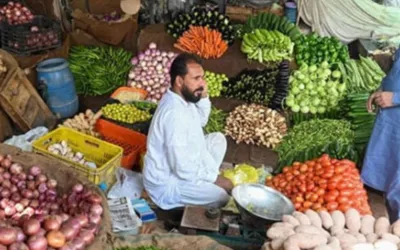
For local retailers, rising prices create a difficult balancing act. Bilal, who owns a general store in Karachi's Baldia area, said his purchasing costs for wheat, lentils, spices, and other household necessities have risen sharply over the past six months.
He said customers often blame retailers when they see higher prices on shelves, even though shopkeepers are also paying more to wholesalers and suppliers. "We have to maintain our margins," he said, explaining that retailers cannot simply absorb every increase in their purchasing costs.
The situation creates pressure on both sides of the counter: retailers need enough margin to keep their businesses running, while consumers want affordable prices. When wholesale costs rise, the final price usually follows, and the consumer ultimately feels the impact.
Bilal also described a shift he has noticed in the market: consumers who once bought groceries for an entire month are increasingly dividing their purchases into weekly or even daily shopping trips.
Premium brands lose ground as local products rise:
Consumers who previously bought higher-priced national or international brands may now look for cheaper alternatives. Detergents, soft drinks, snacks, household products, and other consumer goods are all affected by this shift.
For local manufacturers, that shift can create an unexpected opening. When the price gap between premium brands and lower-cost alternatives grows too large, consumers may experiment with products they previously ignored.
This is creating a new competitive battlefield between established, higher-priced brands and local manufacturers fighting for price-sensitive consumers. A similar pattern is appearing in other categories, including over-the-counter medicines.
However, consumers should not assume that a product is safer or less safe simply because it is local or imported, quality depends on the specific product, manufacturer, regulation, and proper use. What is clear is that inflation can change not only what people buy, but also which brands survive.
LPG adds another shock:
Petrol and diesel are not the only fuels affecting households. The Oil and Gas Regulatory Authority's reported LPG consumer price for September 2026 is about Rs. 258.65 per kilogram, putting an 11.8-kilogram domestic cylinder at roughly Rs. 3,052.
The price has moved sharply in recent months. In August, LPG was reported at about Rs. 254.32 per kilogram, with an 11.8-kilogram cylinder costing roughly Rs. 3,000.92. July brought a notably lower cylinder price of about Rs. 2,848.91.
June, by contrast, stood at roughly Rs. 3,643.41, while May was reported near Rs. 257.46 to Rs. 257.96 per kilogram, and April saw prices above Rs. 3,588 per cylinder. These fluctuations create an added challenge for households and small businesses trying to plan monthly expenses.
Rickshaw drivers working longer to earn the same:
For Karachi's rickshaw drivers, higher LPG costs directly affect daily income. One driver interviewed for this report said he used to manage a single shift to support his household. With rising LPG prices and other expenses, he now has to work two shifts to cover his family's needs and his own daily costs.
The longer hours come with their own expenses, a rickshaw requires maintenance, tire repairs, engine work, and other upkeep. When fuel consumes a larger share of daily earnings, less money remains for maintenance and household expenses. The driver said the financial pressure is not limited to him; other rickshaw drivers face similar struggles as they try to keep their vehicles running while earning enough to feed their families.
Electricity becomes another link in the chain:
Electricity adds another major layer to the cost-of-living crisis. K-Electric's residential tariff structure includes base unit rates ranging from about Rs. 3.95 to more than Rs. 47.20 per kilowatt-hour, depending on consumption slabs, protected status, and other applicable categories.
The latest decision by the National Electric Power Regulatory Authority (NEPRA) adds further cost pressure. According to NEPRA's September 4, 2026 notification, the fuel charges adjustment for July 2026 was set at Rs. 2.0581 per kilowatt-hour. The adjustment applies to consumers of ex-WAPDA distribution companies under federal policy guidelines.
NEPRA's decision noted that the actual fuel charges component for July was Rs. 9.1511 per kilowatt-hour, compared with a reference fuel charges component of Rs. 7.0929 per kilowatt-hour. The authority also pointed to changes in the country's generation mix, including greater reliance on imported coal and higher costs associated with certain fuel sources.
It noted that geopolitical developments contributed to higher RLNG prices, and that contracted supplies from Qatar were affected by force majeure, increasing reliance on spot LNG purchases.
One price increase can trigger many more:
The connection between fuel, electricity, and food is what makes the current pressure especially significant. A bakery pays for electricity and gas. It buys flour and other ingredients. It pays its workers. It transports its products. A retailer buys those products and pays for transportation. The consumer then pays the final price, and every stage along the way carries a cost.
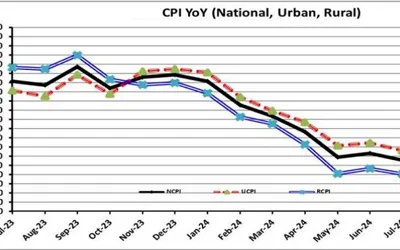
When several of these costs rise at the same time, businesses have little room to absorb the shock. That is why inflation can feel far larger in daily life than a single official percentage suggests. A national inflation figure may combine hundreds of products and services into one index, but households do not experience inflation as a statistic, they experience it as a choice about what to give up.
A changing shopping basket of Pakistan:
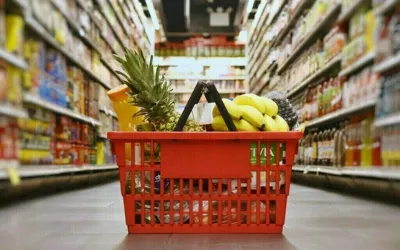
The most visible response is already playing out in Karachi's markets, as families change what they buy, how much they buy, and how often they shop:
1. A monthly grocery trip becomes a weekly trip.
2. A premium brand becomes a local brand.
3. A larger package becomes a smaller one.
4. An extra food item disappears from the shopping list.
These changes could eventually reshape the wider consumer market. Companies that once competed mainly on quality, advertising, and brand image may increasingly have to compete on affordability instead.
The burden is bigger outside the major cities:
Karachi offers only one window into the problem. If a major urban center, with established markets, transportation networks, and relatively broad access to electricity and fuel, is struggling with rising costs, the situation is likely even more difficult in underprivileged urban communities and areas where basic services are less reliable.
The impact of inflation is never distributed equally. A middle-class household may cut back on entertainment, dining out, or other nonessential purchases. A low-income household may have to cut back on food, transportation, or medicine. That difference is what turns inflation from an economic statistic into a challenge to basic living standards.
The government faces a difficult balancing act:
International oil prices, driven in part by ongoing tension in the Strait of Hormuz and the war between Iran and the United States, along with exchange rates, energy generation costs, wheat availability, and domestic market conditions all affect consumer prices. But the public ultimately experiences only the combined result.
Pakistan's next economic milestones will depend on movements in international crude oil prices, LPG prices, electricity adjustments, and government decisions on imports and market stabilization. Those developments will help determine whether the current increases remain a temporary shock or become part of a longer period of pressure on household and energy budgets.
These rising prices have turned everyday life into a hell for everyone, especially for lower-income families and daily wage workers. The current situation adds extra fuel to the fire, making it even harder for people to manage their already complicated lives.
For those who are struggling to put food on the table, pay rent, cover transportation costs and support their families, every price hike brings another challenge pushing them deeper into a crisis they are already fighting to survive.