WASHINGTON: The US Supreme Court rejected President Donald Trump's plan to impose new restrictions on mail-in voting ahead of November's midterm elections, dealing a setback to the White House.
The justices upheld a lower court order temporarily blocking the U.S. Postal Service from implementing new requirements for handling mail-in ballots.
The ruling prevents the Postal Service from introducing the changes before the 2026 elections, although the legal battle is expected to continue.
Conservative Justice Brett Kavanaugh joined the ruling but suggested he could ultimately side with Trump as the case proceeds. He said there was “at least a fair prospect” that the final rule would fall within the Postal Service's legal authority, but argued that applying it in the 2026 elections would be arbitrary and capricious.
Justices Samuel Alito and Clarence Thomas dissented, arguing that the legal challenge to Trump's order was unlikely to succeed and that the Postal Service had broad authority to regulate mail.
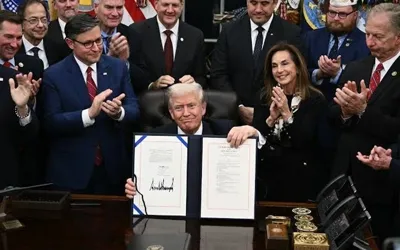
Trump signed an executive order in March directing the Postal Service to introduce new requirements for mail-in ballots, including unique barcodes on ballot envelopes and additional voter information. The president has argued that the measures would help combat electoral fraud.
Twenty-three states and Washington, D.C., challenged the order, arguing that it interfered with states' constitutional authority to administer elections.
Election officials from Democratic-led states warned that implementing the changes so close to the midterm elections could cause delays, mistakes and confusion and potentially prevent voters from receiving their ballots.
Some Republican-led states, including Florida, Louisiana and Montana, backed the Trump administration in court filings.
The Campaign Legal Center welcomed the Supreme Court's decision. Its president, Trevor Potter, said the ruling would prevent the Postal Service from creating disruption in the elections.
A federal judge in Boston, Indira Talwani, had blocked Trump's order on Sept. 4, ruling that implementing the changes shortly before the elections could disenfranchise voters. A federal appeals court later declined to suspend her order.
Some states have already begun distributing mail-in ballots, while others have printed their election materials. Election officials said changing the rules at this stage could be costly and disruptive.
The Supreme Court ruling is the latest setback for Trump's efforts to change mail-in voting rules. In June, the court ruled that states could count ballots postmarked by Election Day even if they arrived after polls closed.
The November midterm elections will determine which party controls Congress.