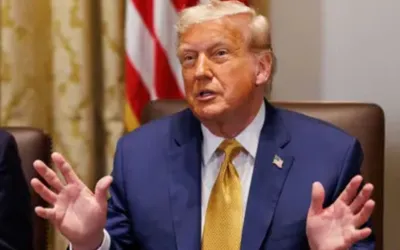
WASHINGTON: Washington has bought itself another few months, but not a way out of its spending fight. President Donald Trump signed a temporary funding bill Wednesday to keep the federal government running through Dec. 11, avoiding another shutdown just weeks before the Nov. 3 midterm elections.
The White House said Trump signed the measure into law after Congress approved the short-term extension. The House passed it 370-48 on Tuesday, following Senate approval on Aug. 8.
The bill extends current government funding beyond Oct. 1, when existing spending authority expires with the start of the new fiscal year. It gives lawmakers 15 more weeks to reach agreements on the 12 appropriations bills needed to fund federal agencies and programs through Sept. 30, 2027.
Congress has so far failed to complete any of the 12 full-year spending bills, which cover major areas of government, including homeland security, federal law enforcement, energy, housing and defense.
The latest stopgap measure comes after months of bitter disputes between Republicans, who control Congress, and Democrats in the House and Senate. Since Trump began his second term, disagreements over health insurance subsidies, immigration enforcement and federal spending have contributed to three partial government shutdowns totaling 161 days.
Neither party wanted another shutdown hanging over the midterm elections. A government closure could have further frustrated voters already dealing with high prices, increased oil and gas costs and the economic impact of tariffs on foreign goods, which have particularly affected farmers.
The temporary funding agreement, however, does not address the government's larger fiscal problems. The national debt surpassed $40 trillion last month, while affordability remains a major concern for voters.
Instead, Congress has pushed many of the most difficult spending decisions into December. Lawmakers will then face the demanding task of negotiating and passing all 12 full-year appropriations bills within a limited window.
The Nov. 3 congressional elections could significantly influence those negotiations. With control of Congress at stake, the results will determine which party enters the December spending talks with greater political leverage.
For now, the immediate shutdown threat is gone and federal agencies will continue operating. But the underlying budget fight remains, leaving Congress with another deadline and little room for another failure.