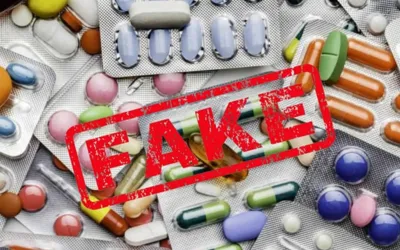
KARACHI: At least nine medicines have been declared counterfeit after laboratory tests found that they did not contain the required quantities of active ingredients, officials said.
The fake medicines were being used to treat ear pain in children and adults. The counterfeit products also included eye ointments, creams, sprays and lotions.
Laboratory tests confirmed that all nine medicines lacked the required quantities of their active ingredients, rendering them ineffective.
The medicine packages also did not carry the company's manufacturing license or drug registration numbers, raising further concerns about their authenticity and regulatory compliance.
Action against Pharma was taken in North Karachi, in Karachi's Central district.
Reports recommending legal action against the company have been sent to the relevant authorities, including the Provincial Inspector of Drugs, Karachi Central, and the secretary of the Sindh Quality Control Board.
Officials said operations against manufacturers and sellers of counterfeit medicines would continue.
They said timely action against fake drugs would help protect patients from using counterfeit and ineffective medicines.
Earlier, Sindh Drug Testing Laboratory has declared seven batches of six commonly used medicines counterfeit after tests found that the samples lacked their stated active pharmaceutical ingredients, raising concerns about patient safety and the supply of fake drugs.
The affected medicines include antibiotics, drugs used to treat stomach problems and abdominal cramps, painkillers and a laxative. Authorities said the companies associated with the brands had denied manufacturing the identified batches.
Adnan Rizvi, director of the Drug Testing Laboratory, said the laboratory had declared specific batches of Velosef 500mg capsules, Augmentin 625mg tablets, No-Spa Forte 80mg tablets, Mucaine suspension, Brexin tablets and Laxoberon liquid counterfeit under the Drugs Act, 1976.
Laboratory analysis found that the tested samples did not contain the active ingredients required to produce their intended therapeutic effects, Rizvi said.
The affected batches are:
Velosef 500mg capsules: LX3E
Augmentin 625mg tablets: YT9D
No-Spa Forte 80mg tablets: AN010
Mucaine suspension: 257A088
Brexin tablets: W6BC
Laxoberon liquid: 46292 and 43445
Velosef and Augmentin are antibiotics commonly prescribed for bacterial infections. No-Spa Forte is used to relieve abdominal pain and spasms, while Mucaine is used for acidity and other stomach complaints. Brexin is prescribed for pain and inflammation, particularly in joint conditions.
In the case of Laxoberon, laboratory testing confirmed the absence of sodium picosulfate, the active ingredient responsible for its laxative effect.
Rizvi said Martin Dow Marker, the manufacturer associated with Laxoberon, had informed authorities in writing that it had not produced the identified batches. Companies associated with the other five brands had also denied manufacturing the questioned products.
The companies’ responses, alongside the laboratory findings, have raised concerns that counterfeit medicines carrying the names of established pharmaceutical brands may have entered the drug supply chain.
Rizvi said the laboratory reports had been forwarded to the secretary of the Sindh Quality Control Board and the provincial drug inspector for Karachi South for legal action under the Drugs Act, 1976. Reports concerning the two Laxoberon batches were also sent to the relevant provincial quality-control authorities for further proceedings.
Health experts warned that medicines lacking their stated active ingredients could pose serious risks because they fail to deliver the intended treatment. The consequences could be particularly serious for antibiotics, as patients with bacterial infections could experience worsening illness or delays in receiving effective treatment.
Patients using counterfeit medicines for pain, digestive problems or constipation may also continue to experience symptoms despite taking the prescribed products.
Authorities have not disclosed how much of the identified batches may have reached the market, where the products were distributed or whether any patients suffered harm after using them.
Officials stressed that the findings apply only to the specific batches identified by the laboratory and do not automatically extend to other batches of the same brands manufactured by legitimate companies.