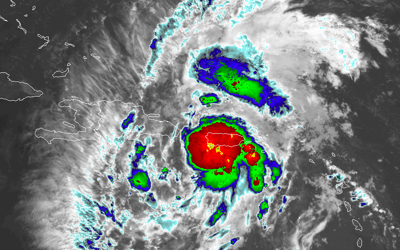
August 2026 ranked as the hottest August ever measured, statistically tying the previous global heat record set in July 2023, according to data released by the European climate service Copernicus. The milestone capped the hottest Northern Hemisphere summer on record, driven by a combination of human-caused climate change and a powerful El Niño.
Last month's global average temperature came in at 62.53 degrees Fahrenheit (16.96 degrees Celsius), just one-hundredth of a degree Celsius above the July 2023 record. Because that margin falls within the data's uncertainty range, Copernicus climate lead Samantha Burgess said the two months are considered tied.
Globally, August ran 1.65 degrees Celsius (nearly 3 degrees Fahrenheit) above pre-industrial levels, well past the 1.5-degree Celsius threshold established by the 2015 Paris climate agreement. Every one of the eight hottest months in the Copernicus record, which dates to 1940, has occurred since July 2023.
A Summer of Broken Records
The U.S. National Oceanic and Atmospheric Administration reported that summer 2026 was hotter across the Lower 48 states than the peak of the 1936 Dust Bowl, for the first time on record. The June-through-August average hit 74.37 degrees Fahrenheit (23.54 degrees Celsius), nearly four-tenths of a degree above the 90-year-old mark. Worldwide, the summer tied 2024 for the hottest on record.
August alone shattered U.S. heat records by more than half a degree Fahrenheit, with the month averaging 75.58 degrees (24.21 degrees Celsius) and daytime highs reaching a record 88.56 degrees (31.42 degrees Celsius) on average. July had already broken a separate long-standing Dust Bowl-era record.
Ocean temperatures also hit new extremes: Global monthly sea temperatures in August matched the all-time record set in March 2024, and Aug. 22 was the hottest single day ever recorded in the world's oceans.
Fossil Fuels, Not Just El Niño, Drive the Heat
Scientists emphasized that while El Niño, the periodic warming of the Pacific Ocean that alters weather patterns worldwide, is contributing to the heat, it is a secondary factor compared with greenhouse gas emissions from burning coal, oil and natural gas. Burgess said El Niño typically adds only one or two-tenths of a degree Celsius to global temperatures, with the bulk of the warming driven by fossil fuel combustion.
Imperial College London climate scientist Friederike Otto said climate change intensifies every El Niño, and that record-breaking months will continue until fossil fuel use ends.
Berkeley Earth's Zeke Hausfather noted that August, rather than the typically warmer July, setting the all-time record is itself a sign that climate change is accelerating. He projected that 2026 is increasingly likely to surpass 2024 as the warmest year on record, with 2027 almost certain to exceed both, potentially reaching 1.8 degrees Celsius above pre-industrial levels amid an unusually strong El Niño.
Burgess added that some individual days could exceed an even higher threshold: 2 degrees Celsius above mid-19th-century levels.
Scientists Warn of Escalating Impacts
Texas Tech climate scientist Katharine Hayhoe said continued warming will bring more frequent and dangerous heat waves, storms, floods and wildfires.
Burgess described a shift in how climate change is experienced, noting that its effects, school closures, overwhelmed hospitals, melting roads and buckling train lines, have moved from being seen as distant problems to disrupting daily life directly.
United Nations climate chief Simon Stiell warned that continued fossil fuel use will keep driving extreme heat that kills people and strains transportation, health and food systems worldwide.
Texas A&M climate scientist Andrew Dessler said the trend has been predicted by scientists for decades, framing the central question now as whether meaningful action will be taken.