LOS ANGELES: Presley Gerber, the model and only son of supermodel Cindy Crawford and businessman Rande Gerber, died on Sunday, Sept. 20, at a rehabilitation facility in Los Angeles County, according to reports.
He was just 27 as the cause of death has not been disclosed, and an autopsy was pending, leaving fans and the fashion world mourning a young star whose public journey stretched from international runways to candid conversations about mental health and addiction.
Gerber’s death sent a wave of grief through social media, where fans, friends and fellow celebrities shared condolences for the Crawford-Gerber family. His family has asked for privacy during what a representative described as a “very difficult and painful time.”
Gerber, born on July 2, 1999, the older brother of model and actress Kaia Gerber. Like his famous mother and sister, he built a career in fashion after entering the modeling industry as a teenager.
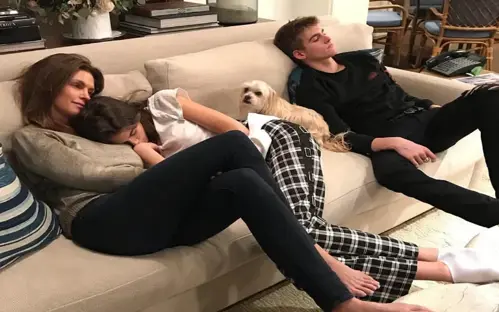
Gerber signed with IMG Models at 15 and quickly began making his own mark in the fashion industry. He made his runway debut for Moschino in 2016 and later appeared on runways and in campaigns associated with major fashion houses, including Dolce & Gabbana, Burberry, Bottega Veneta and Calvin Klein.
One of his most recognizable appearances came in 2018, when he joined his mother in Pepsi’s Super Bowl LII commercial, “This Is the Pepsi.” The campaign revisited Crawford’s famous 1992 Pepsi advertisement and placed mother and son together in a major pop-culture moment. Pepsi confirmed at the time that Presley was part of the Super Bowl campaign.
The commercial became one of the memorable highlights of Gerber’s early public career and showed him stepping into the spotlight alongside one of the world's best-known supermodels.
Although Gerber was primarily known for modeling rather than a major movie career, he also made several screen appearances. He also appeared as himself alongside his father, Rande Gerber, on the 2024 celebrity pickleball series “The Wager.”
These appearances added another dimension to a career that had largely been defined by fashion, advertising and his high-profile family.
Behind the polished photographs and fashion campaigns, Gerber was also increasingly open about difficult personal struggles.
He spoke publicly about depression, mental health and substance-use issues, using his own experiences to encourage others to talk about problems that are often kept private. In a 2023 appearance on the Studio 22 podcast.
Gerber discussed his struggles and said he hoped that sharing his story could help even one person who was experiencing something similar.
He later used Instagram to create “Mental Health Mondays,” a series intended to encourage more honest conversations about mental health and the challenges people often hide. Reuters reported that he began the series in 2025.
His Instagram biography also carried a simple message that became closely associated with his public presence: “BE KIND.”
Gerber’s struggles also included addiction and sobriety. In recent years, he publicly documented parts of his recovery journey, including treatment experiences.
In March, he shared an Instagram post about undergoing ibogaine treatment, a psychedelic substance that has been studied in connection with addiction treatment but is not approved for medical use in the United States.
His posts described fear, self-reflection and his hope of finding a path forward. His family publicly supported his efforts.
He said he was dealing with a lot of loss and was taking some medicines. He also said he had seen about 15 psychiatrists and wanted more help with his medicines.
Cindy Crawford praised her son’s courage after his treatment experience, while Rande Gerber also expressed pride in his willingness to confront difficult parts of his life. Their support became another visible part of Presley’s long and complicated recovery journey.

She described Presley as someone who chose to be unusually open about his experiences despite the family’s traditionally private approach to personal matters. Kaia said his willingness to show vulnerability changed the way the family viewed openness and asking for help.