WASHINGTON: All Iranian airlines will be shut down starting Sept. 23, U.S. Treasury Secretary Scott Bessent said, warning that countries and companies that continue to do business with them will face exclusion from the dollar system.
Speaking to CNBC's "Squawk Box," Bessent said the measure would be enforced by targeting anyone who provides services to Iranian carriers.
"How do we do that? That if they land, you cannot provide them with fuel. You cannot provide them with landing services, you cannot sell them tickets, or you will be knocked out of the dollar system," he said.
Bessent said Washington was pressuring Iran "like never before," adding that the U.S. was putting a stop to Iran's enablers around the world, such as by sanctioning banks.
Last week, the Treasury announced new sanctions on Russia's state-controlled VTB Bank as part of its effort to economically isolate Iran by targeting its business partners and other financial enablers.
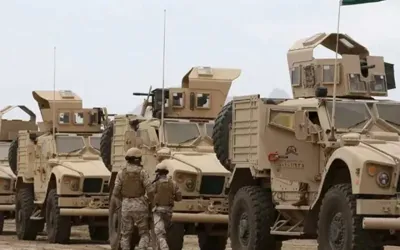
Separately, the U.K. will reportedly support Saudi Arabia against Iranian-backed Houthi rebels, with the Royal Air Force providing air-to-air refueling of Saudi planes.
Prime Minister Andy Burnham told reporters the arrangement will be for a matter of weeks and will be kept under review.
The move comes as U.S. President Donald Trump refused Riyadh's request for help against the rebels on the weekend, reportedly cancelling a planned airstrike.
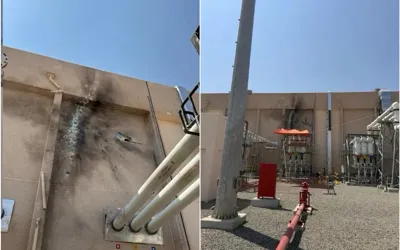
Burnham said he was "acting to secure the interests of Britain and the wider region, because of course Saudi Arabia has been experiencing attack, is looking at potential further disruption, and we need to keep those pathways (for oil) open," according to the Associated Press.
Houthi rebels recently seized Yemen's Perim Island on the Red Sea, tightening their grip on the Bab el-Mandeb Strait, which puts Iran and its proxies on course to exercise control over two critically important oil choke points: that strait and the Strait of Hormuz.
The Bab el-Mandeb Strait is an important alternative for oil exports to bypass the Strait of Hormuz, especially for Saudi Arabia, whose East-West pipeline allows the kingdom to divert some oil flows to be exported from the Red Sea.
Last week, NATO Secretary Mark Rutte signaled that European nations could also provide support to Saudi Arabia, telling a BBC interview that "I would not be surprised if some phone calls were taking place between European allies — 'hey, how are we going to deal with this?'"