BEIRUT: Israel said Thursday it had destroyed a major Hezbollah underground network beneath the Ali al-Taher ridge in southern Lebanon, strengthening its hold over the strategic site and seeking to block the group from rebuilding its military presence.
Prime Minister Benjamin Netanyahu and Defense Minister Israel Katz said Israeli forces would remain in the area to prevent Hezbollah from re-establishing its presence and rebuilding its capabilities.
The Ali al-Taher ridge, about 15 kilometers (10 miles) from the Israeli border in the Nabatieh region, has become a key flashpoint in the conflict between Israel and Hezbollah. Lebanese security sources told Reuters in July that the group was believed to have built an underground command center and weapons storage facilities beneath the ridge.
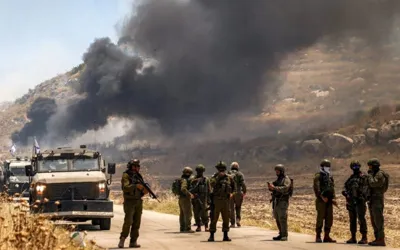
The Israeli military said its forces had secured operational control of the ridge above and below ground before dismantling the underground network, which extended more than 2 kilometers (1.2 miles).
According to the military, the network contained dozens of rockets, missiles and drones, as well as anti-tank missiles, mines and explosive devices. It also housed a central command complex belonging to Hezbollah’s Badr unit, including command centers, weapons storage rooms and living quarters that allowed fighters to remain underground for extended periods.
Netanyahu and Katz described the infrastructure as a strategic facility built over two decades with Iranian funding and planning.
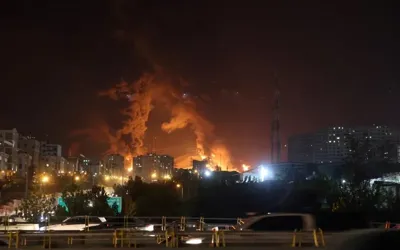
Lebanon’s state-run National News Agency reported that Israeli forces carried out a massive explosion at the ridge, causing tremors and a powerful rumble across Nabatieh and surrounding areas. The U.S. Geological Survey recorded a 4.1 magnitude tremor in the area, while AFP journalists in southern Lebanon reported hearing large explosions.
Israel announced last week that it had captured the ridge, which has become one of its main operational focuses in southern Lebanon. The area is also located within an expanded Israeli-declared buffer zone.
A U.S.-brokered framework reached after a June ceasefire called for Israeli forces to gradually withdraw from southern Lebanon while Lebanese forces moved to disarm Hezbollah. The process has stalled, however, with Hezbollah refusing to surrender its weapons and Israel saying it will not withdraw until the group is disarmed.
During negotiations, the United States proposed that the Lebanese army take control of the Ali al-Taher ridge, but Hezbollah rejected the proposal, according to a source familiar with the talks.
Violence had eased after understandings between Iran and the United States in June and a subsequent agreement between Lebanon and Israel, but Israeli strikes have intensified in recent days.
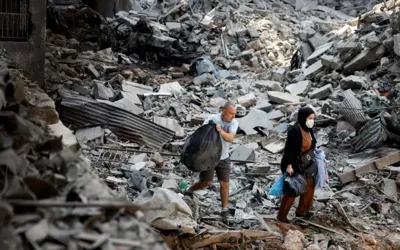
Lebanese authorities say Israeli strikes have killed more than 4,300 people since March, while Israeli forces continue to occupy parts of what they describe as a security zone in southern Lebanon.