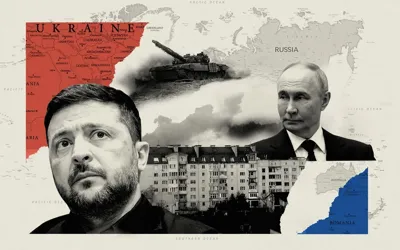
MOSCOW: Russia’s parliamentary election enters its final day Sunday, with residents of four Ukrainian regions voting for the first time since Moscow claimed them as Russian territory in 2022.
Ukraine and the European Union have rejected the vote, while rights groups allege residents are being pressured to participate.
Occupied regions take part in Russia’s vote
The three-day election, which began Friday, will decide all 450 seats in Russia’s State Duma, the lower house of parliament.
Voting in Russian-held parts of Donetsk, Luhansk, Kherson and Zaporizhzhia began before the nationwide election and was extended in some areas for security reasons. Russian authorities say more than 3.5 million people are eligible to vote in the four regions.
Moscow declared the territories part of Russia in September 2022, although its forces did not control all of them. The annexations have not been internationally recognized. Voting is also taking place in Crimea, which Russia annexed in 2014.
Putin calls for unity at the polls
President Vladimir Putin has highlighted participation in the four regions, calling it their first State Duma election since what Moscow describes as their “reunification” with Russia.
Putin has also presented the election as a show of national unity and support for Russian troops fighting in Ukraine. Soldiers serving in the war are eligible to vote.
The election is the first parliamentary vote since Russia launched its full-scale invasion of Ukraine in February 2022. The Kremlin has portrayed it as a demonstration of public support for its wartime policies.
Ukraine rejects Russia’s election in occupied areas
Ukraine has condemned the election in the occupied territories and urged foreign governments and international organizations not to recognize the voting or its results.
Ukrainian rights groups have also called on residents in Russian-held areas to stay away from polling stations, saying the election could be used to legitimize Russia’s control over the territories.
The European Union has said it will not recognize the elections or their results in the occupied regions.
Activists allege pressure on Ukrainian voters
Ukrainian human rights activists say Russian-appointed election officials have gone door to door in some areas, accompanied by security personnel, to encourage residents to vote.
Violeta Artemchuk of the Donbas SOS human rights group alleged that public-sector workers could face pressure if they do not participate. She also said some residents dependent on pensions or social assistance could fear losing benefits if they are viewed as disloyal to Russian authorities.
The allegations could not be independently verified.
Cyberattacks target Russia’s election systems
Russian authorities have reported attacks on online voting systems and communication networks during the election.
Officials said Moscow’s online voting system came under a major cyberattack Saturday and that an attempted disruption of communication lines in Russia’s Far East was also stopped. Putin accused Ukraine of trying to interfere with the election but did not provide evidence publicly linking Kyiv to the attacks.
Nationwide turnout reached 32.58% by Saturday afternoon, according to Russia’s Central Election Commission data cited by state media.
Russia’s anti-war opposition faces restrictions
The election is taking place in a tightly controlled political environment, with most prominent anti-war candidates barred from competing.
The liberal Yabloko party was excluded from the party-list contest after a Supreme Court ruling last month. Some of its candidates are still running in individual constituencies, which account for half of the 450 State Duma seats.
The election has also caused a diplomatic dispute with Moldova over Russia’s decision to open polling stations in the breakaway Transdniestria region for Russian citizens. Moscow says Russian passport holders there have the right to vote, while Moldova has objected to the polling arrangements.