A wedding turned into a funeral in southern Iran on Thursday as families buried victims of a reported U.S. airstrike, while Tehran fired missiles and drones at American forces in Kuwait in the sharpest escalation of the war in more than a month.
Mourners gathered in the late afternoon outside the village of Kuhestak in Sirik County, along Iran's Strait of Hormuz coast, where heavy U.S. airstrikes struck Tuesday. Iranian state television reported that a 22-year-old woman died in a hospital from injuries sustained in the strike, bringing the reported death toll from the wedding attack to five. Iranian officials said nearly 70 people were wounded.
The United States said it was investigating the reports. Vice President JD Vance told reporters Thursday that Washington wanted to determine what happened.
"We're investigating it because obviously we care. We want to know," Vance said. "If we do make mistakes, again, this is a big difference between us and Iran, when our military makes mistakes, they learn from them to try to get better from them."
The U.S. military said it was aware of the Iranian reports but maintained that it "never targets civilians."
Families bury wedding victims
At a funeral for four of the reported victims, footage released by Iran's Mehr news agency showed a pickup truck carrying a flag-draped coffin beneath a canopy of palm trees.
A reporter identified one of the victims as Amir-Mohammad Karimi, a 4-year-old boy, describing him as having been killed in the attack on southern Iran.
Other footage showed mourners throwing flower petals into the air as somber music played from a loudspeaker. A coffin was carried past soldiers standing at attention with rifles.
The reported attack has fueled anger in the area because it struck a civilian gathering during a wedding.
"If it was a military location, it wouldn't be so painful. This was a wedding ceremony, but they turned people's joy into mourning," the semi-official Tasnim news agency quoted a local resident as saying.
U.S. strikes spark Iranian retaliation
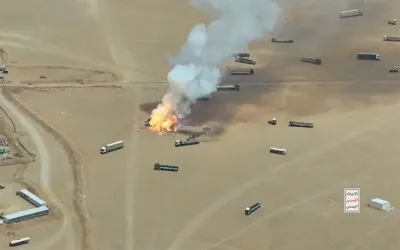
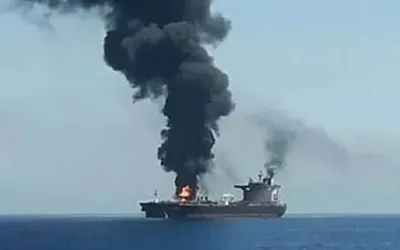
Washington launched heavy airstrikes Tuesday against what it said were military targets along Iran's southern coast, describing the operation as retaliation for Iranian attacks on shipping in the Strait of Hormuz.
Iran reported that 18 people were killed in the latest U.S. assault. Tehran responded Wednesday with attacks on U.S. bases and military positions in Iraq, Jordan, Qatar, Kuwait and Bahrain, followed by further strikes early Thursday against what it said was another U.S. base in Kuwait.
Kuwait's military said its air defenses intercepted missiles and drones. The confrontation later appeared to ease, with no further major attacks from either side reported as Thursday wore on.
The latest exchange marked the most significant flare-up since a relatively quiet period in the Gulf during August.
U.S. President Donald Trump abruptly halted two weeks of intensive American airstrikes in July after U.S. military officials warned that Washington was running low on munitions.
Oil markets feel the impact
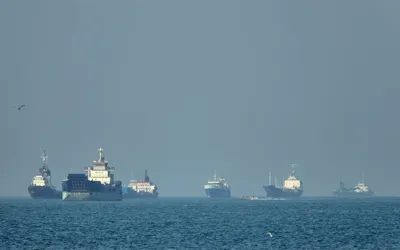
The renewed fighting has also sent fresh shockwaves through global energy markets because of the strategic importance of the Strait of Hormuz.
Oil prices rose for a fourth consecutive day Thursday, pushing Brent crude futures above $96 a barrel, as investors assessed the possibility of further disruptions to shipping through the waterway.
Before the war, the Strait of Hormuz carried roughly one-fifth of global oil and gas shipments. Any prolonged disruption could therefore have consequences far beyond the region, putting additional pressure on energy prices and economies that depend on Middle Eastern supplies.
The latest attacks have revived concerns that commercial shipping could face greater risks if the conflict spreads or Iran seeks to restrict access through the strait.
Trump’s war goals remain unresolved
The escalation has also renewed questions about whether Washington has achieved the objectives Trump outlined when he launched Operation Epic Fury in February.
The U.S. administration said the campaign was intended to end Iran's nuclear program, limit its ability to attack neighboring countries and create conditions that could lead to the removal of Iran's leadership.
Despite months of military pressure and severe economic damage, Iran's clerical rulers remain in power.
Iran's economy has suffered heavily under a U.S. blockade, but Tehran has continued to signal that it wants to emerge from the conflict in a stronger position. Iranian leaders have demanded the lifting of sanctions and have sought greater control over shipping through the Strait of Hormuz, including the possibility of collecting fees from vessels using the strategic waterway.
For now, the latest escalation has left civilians mourning in southern Iran, American forces on alert across the Gulf and global energy markets watching closely for signs that the conflict could widen further.