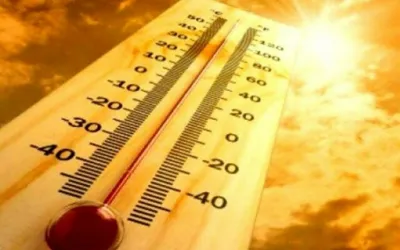
- Last month, temperatures in Mali soared above 48C, leading to hundreds of deaths.
- Human activities, such as burning fossil fuels, elevated temperatures by up to 1.4C above normal levels.
- A separate study attributed drought in Southern Africa to El Niño, not climate change.
A separate study attributed drought in Southern Africa to El Niño, rather than climate change.
A strong heatwave struck several countries in the Sahel region and across West Africa at the end of March and persisted into early April.
Southern regions of Mali and Burkina Faso experienced the most intense heat. In the first days of April, Gabriel Toure Hospital in Bamako, the capital of Mali, reported 102 deaths.
Around half of the deceased were over 60 years of age, with the hospital attributing heat as a contributing factor to many of these casualties.
Researchers assert that global climate change played a key role in this five-day heatwave.
A new analysis by scientists affiliated with the World Weather Attribution group indicates that the high daytime and nighttime temperatures could not have occurred without the world's long-term utilization of coal, oil, and gas, as well as activities like deforestation.
According to the study, climate change caused temperatures to rise to 1.5C above normal in Mali and Burkina Faso, making nights even hotter by 2C above the average. The overall temperature across the region was elevated by 1.4C throughout the five days.
"For some, a heatwave being 1.4 or 1.5C hotter because of climate change might not sound like a big increase," said Kiswendsida Guigma, a climate scientist at the Red Cross Red Crescent Climate Centre in Burkina Faso.
While intense heatwaves are still relatively rare in this region, researchers anticipate them becoming more common as the climate warms.
With average global temperatures currently approximately 1.2C warmer than pre-industrial levels, scientists project events like this recent one in Mali occurring once every 200 years. However, if global temperatures surpass 2C, powerful heatwaves would occur every 20 years.
While humanity's fingerprints are evident in this event, the serious drought that struck countries in southern Africa earlier this year does not share the same human influence.
Low rainfall resulted in crop failures in several countries, leading to an estimated 20 million people facing hunger. Water shortages in Zambia and Zimbabwe triggered outbreaks of cholera, prompting both countries as well as neighboring Malawi to declare states of disaster.
[embedpost slug="south-africa-tragic-bus-crash-killed-45-people-8-year-old-boy-only-survivor-left/"]