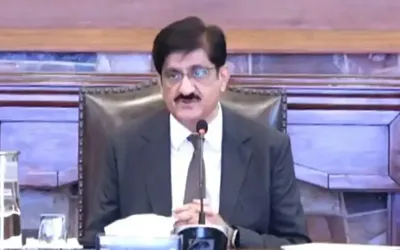
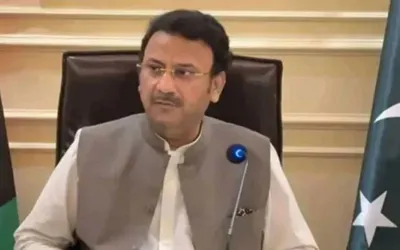
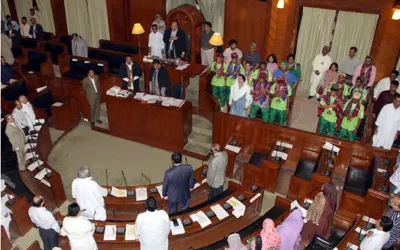
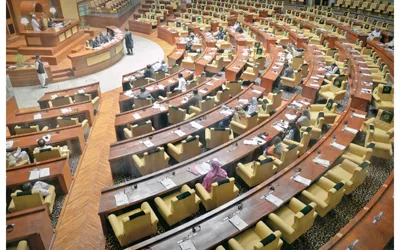
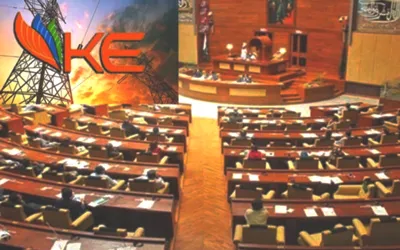
KARACHI: The Sindh Assembly on Monday passed the Sindh Local Government Act 2026 by a majority vote amid strong opposition protests, with opposition lawmakers tearing copies of the bill and chanting slogans in the chamber.
Law Minister Zia-ul-Hassan Lanjar presented the bill seeking amendments to local government laws during the assembly session. The move triggered an uproar, as opposition members protested and tore copies of the proposed legislation.
Despite the protest, the assembly proceeded with voting and approved the bill by a majority. The session was later adjourned until 3 p.m. Tuesday.
Opposition parties rejected the legislation and announced plans to challenge its approval in court.
Jamaat-e-Islami lawmaker Muhammad Farooq said the bill did not give local governments sufficient powers and accused the provincial government of retaining authority at the provincial level.
He said the opposition parties, including the Pakistan Tehreek-e-Insaf, Jamaat-e-Islami and Muttahida Qaumi Movement, had opposed the legislation. He also announced that Jamaat-e-Islami would approach the courts against the bill, calling it “anti-democratic.”
MQM opposition leader Ali Khursheedi described the passage of the bill as “political dictatorship,” saying the government had set aside other assembly business to rush the legislation through.
He claimed that political parties inside and outside parliament had rejected the bill and accused the Sindh government of undermining a Supreme Court ruling on the transfer of powers to local governments.
MQM lawmaker Iftikhar Alam said the opposition's position had not been heard and reiterated the demand for transferring authority to the grassroots level.
Responding to the criticism, Lanjar said the bill had been introduced through a democratic process and that a special committee, which included members of the MQM, Jamaat-e-Islami and PTI, had reviewed it.
He said the committee had discussed every section of the bill and opposition members had submitted their proposals, several of which the government accepted.
Lanjar said the bill provided for the government to approach the Election Commission 120 days before the completion of a local body's term. He said the powers of local representatives would cease once an election schedule was announced.
He added that the bill empowered deputy mayors and vice chairpersons as conveners and strengthened the authority of local government representatives.
Information Minister Sharjeel Inam Memon said there was always room for improvement in any system.
He said Sindh was the only province where a functioning local government system existed, claiming that other provincial governments had failed to hold local elections despite directives from the Election Commission.
Memon said the bill also established a mediation commission to help resolve minor disputes at the union council level, with decisions later eligible to receive the status of court decrees.