The era of prolonged package delivery times is over. With abundant data and advanced technologies at hand, there's no excuse for poor service.
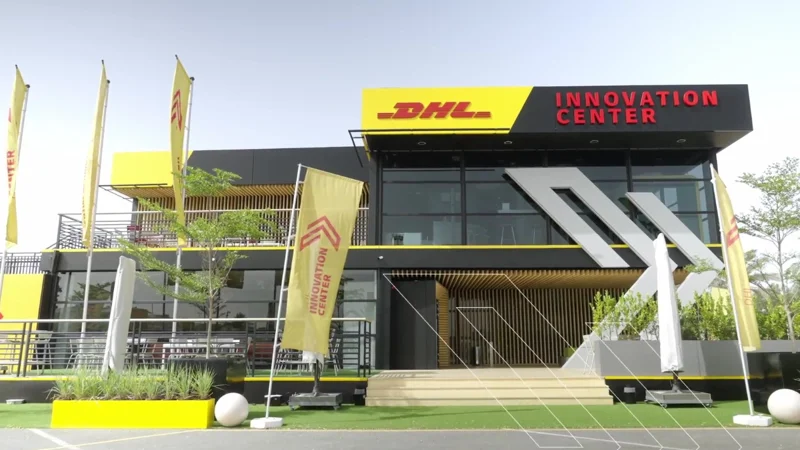
This is why DHL, a leading player in the industry, is harnessing numerous innovations to enhance its operations, especially at its MEA Innovation Centre in Dubai. Irina Albanese, Head of Innovation MEA at DHL Customer Solutions and Innovation, discussed with Frontier Enterprise the significant advancements driving the company's expansion in the region.
Can you provide an overview of the technology stack that DHL uses for its Dubai Innovation Centre?
Our innovation centers embody DHL's global efforts and spearhead specialized projects designed for specific markets. These centers are committed to delivering state-of-the-art solutions and services to our customers, continually exploring and advancing future technologies and innovations. In particular, at the MEA Innovation Center, teams are dedicated to creating affordable sensors to cater to the price-sensitive market.
What’s a specific technological challenge you faced in your Dubai operations, and how did you address it?
A major technological hurdle we encountered in our operations in Dubai involved enhancing logistics and supply chain processes to accommodate the rapid expansion of e-commerce and the increased need for fast, dependable deliveries. Given Dubai's status as a key global trade center, we required advanced solutions to efficiently handle the intricacies of customs regulations, diverse delivery needs, and optimal route planning within a bustling urban setting, all while prioritizing sustainability in our operations.
How has AI improved DHL’s decision-making or operational efficiency?
DHL is currently testing AI in multiple applications, such as automating the labor-intensive process of integrating and correlating data from different source systems and offering proactive initial insights. Additionally, DHL is employing generative AI to clean and analyze data, which aids in optimizing warehouse designs, staffing decisions, and forecasting inventory demand. These efforts aim to improve precision and operational efficiency.
Outside AI, what are some of the most exciting developments in your innovation centre?
In the MEA Innovation Centre, one of the most noteworthy advancements is the focus on Internet of Things (IoT) technology. DHL has established a dedicated IoT team that explores cutting-edge developments in this field. Depending on specific use cases, the team recommends suitable devices for monitoring factors like location, temperature, humidity, light, and shock. Recently, there has been growing interest in smart locks, which add an extra layer of security to DHL's services.
DHL's proprietary IoT platform enables real-time tracking of a shipment's entire journey, from initial creation with an IoT device attached, through transportation, to its final delivery. The data gathered during this process enables DHL to identify trends for optimizing routes and monitor variables such as temperature changes. Moreover, DHL is actively researching low-cost sensor solutions tailored for the price-sensitive Middle Eastern market.
Last month, DHL collaborated with the Dubai Future Foundation to host the third edition of the Fast Forward Challenge competition. This competition invites startups and young companies to propose innovative solutions that could enhance the future of logistics and supply chains across the MEA region and globally. The winning solution, offered by Freterium, is a transportation management system customized for consumer goods, retail, and distribution sectors. As a result of winning, Freterium now has opportunities to further develop and promote their solution in the market through access to various networks.
Outside AI, what are some of the most exciting developments in your innovation centre?
In the MEA Innovation Centre, one of the most noteworthy advancements is the focus on Internet of Things (IoT) technology. DHL has established a dedicated IoT team that explores cutting-edge developments in this field. Depending on specific use cases, the team recommends suitable devices for monitoring factors like location, temperature, humidity, light, and shock. Recently, there has been growing interest in smart locks, which add an extra layer of security to DHL's services.
DHL's proprietary IoT platform enables real-time tracking of a shipment's entire journey, from initial creation with an IoT device attached, through transportation, to its final delivery. The data gathered during this process enables DHL to identify trends for optimizing routes and monitor variables such as temperature changes. Moreover, DHL is actively researching low-cost sensor solutions tailored for the price-sensitive Middle Eastern market.
Last month, DHL collaborated with the Dubai Future Foundation to host the third edition of the Fast Forward Challenge competition. This competition invites startups and young companies to propose innovative solutions that could enhance the future of logistics and supply chains across the MEA region and globally. The winning solution, offered by Freterium, is a transportation management system customized for consumer goods, retail, and distribution sectors. As a result of winning, Freterium now has opportunities to further develop and promote their solution in the market through access to various networks.
What other key digital transformation initiatives are DHL working on? How are they improving your processes?
DHL is continuously exploring new technologies to enhance both internal operations and customer experiences. One prominent focus area is big data analytics, which provides the visibility necessary for building more robust and resilient supply chains. While big data analytics doesn't physically alter the supply chain, it significantly enhances visibility and provides a solid foundation for making informed decisions that optimize various segments of the supply chain. This leads to markedly improved service levels, from optimizing pallet storage in warehouses to enhancing customer case management.
Another emerging trend is computer vision, which enables systems to extract valuable information from digital images, videos, and other visual inputs. This technology is pivotal in automating and digitizing logistics processes, poised to reshape the logistics industry. Computer vision promises improvements in efficiency, safety, and sustainability across logistics operations. Its rapid adoption extends beyond logistics, signaling its transformative potential across multiple industries.
Sustainability is a core pillar at DHL, with a goal to achieve net zero emissions by 2050. For 2030, we aim to:
-Reduce annual GHG emissions to under 29 million metric tons. -Electrify 60% of our last-mile delivery vehicles. -Increase the share of sustainable fuels to over 30%. -Offer green alternatives for 100% of all core products and services.
Recently, DHL Supply Chain has focused on leveraging orchestration to enhance its operations. Using advanced data analytics and machine learning, we are developing a central nervous system for our operations. This system aims to optimize resource allocation, automate workflows, and respond dynamically to real-time demand fluctuations. Integrated with both existing and new technologies, our orchestration platform creates a connected and agile supply chain, improving efficiency, resilience, and cost-effectiveness.
Orchestration extends across the entire supply chain, including significant advancements in warehouse operations. Collaborating with leading system integration partners, DHL Supply Chain is advancing its capabilities in robotics and automation. This involves rapid integration and continuous data flow synchronization, laying the groundwork for effective warehouse orchestration. In various DHL regions, the initial deployment of standardized integration and orchestration layers has reduced implementation timelines by up to 60%, paving the way for broader implementation across over 2,000 DHL operations worldwide.