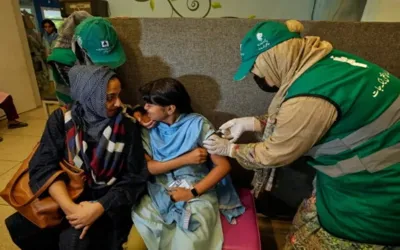
DHAKA: Bangladesh is struggling to contain the world's largest measles outbreak, a crisis driven by weak data, inadequate outreach and vaccination gaps that experts warn should serve as a cautionary tale for other nations about the dangers of declining immunization rates.
The World Health Organization said Bangladesh has reported 202,000 suspected measles cases — 22,000 of them laboratory-confirmed — since the outbreak began in mid-March through Oct. 9. That is more suspected cases than any other country this year.
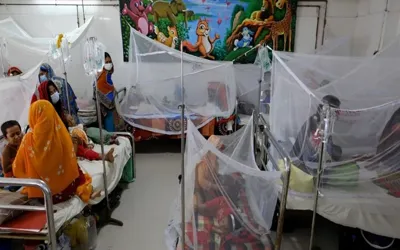
So far, 1,147 people have died of the highly contagious disease, with 94% of reported deaths among children under 5, according to the WHO.
Bangladesh's routine vaccination program faltered in 2025. The country had nearly reached the 95% coverage level the WHO says is needed to prevent outbreaks in recent years, but coverage dropped last year.
A Reuters review of WHO documents, along with interviews with more than a dozen scientists, health workers and officials, found that Bangladesh's emergency response was hampered by data that left out millions of children, shortcomings in preparation and a failure to reach enough parents.
"This is a real warning to every country," said Mark Jit, a WHO vaccine adviser and professor at the School of Global Public Health at New York University.
Jit said preventing an outbreak through vaccinations was easier, cheaper and safer than responding to an emergency.
"The response will stop the outbreak eventually, but in the meantime, many will have had measles, and some will have died," he said.
Ziauddin Hyder, special assistant on health affairs to Prime Minister Tarique Rahman, told Reuters in September that the government was doing everything it could to end the outbreak. The government did not respond to further questions sent in October.
In the town of Chhatak in the Sylhet region, the unvaccinated 9-month-old daughter of 30-year-old carpenter Humayun Rashid died in June. Labiba Akter could have received an inoculation in April, when an emergency program lowered the vaccination age to 6 months from 9.
In May, Health Minister Sardar Md. Sakhawat Husain said the emergency drive had brought cases in hotspots "almost to zero" and that the outbreak was under control.
Yet in September, Bangladesh reported a daily average of 1,198 new measles cases. That was the highest total since May.
The Bangladesh outbreak comes as vaccine hesitancy is rising, particularly in wealthier nations, amid skepticism championed by figures such as U.S. Health Secretary Robert F. Kennedy Jr. In Bangladesh, experts said, access to inoculations and awareness are bigger hurdles.
Until recently, Bangladesh had been a vaccination success story. The WHO and UNICEF estimated that in 2024 the country achieved 96% coverage for the first vaccine dose and 93% for the second, which is given to reach the small percentage of children who do not develop immunity after one shot.
But that same year, protests erupted that ended 15 years of rule by Prime Minister Sheikh Hasina. In the ensuing political turmoil, health workers went on strike, vaccine orders were delayed and follow-up vaccinations that usually accompany routine programs were disrupted.
In a report published in July this year, WHO and UNICEF estimated first-dose coverage in 2025 had fallen to 90%, while second-dose coverage was 86% — several percentage points below the 95% needed for herd immunity.
The report also raised questions about the quality of official data on vaccinations for measles and other diseases for 2023 to 2025, saying preliminary figures sometimes showed numbers of those inoculated exceeded 100% of those targeted, indicating mistakes in counting doses or target numbers.