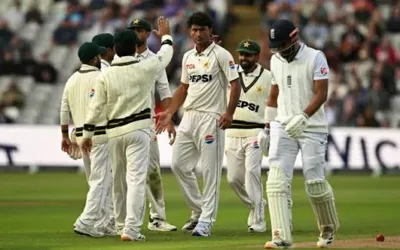
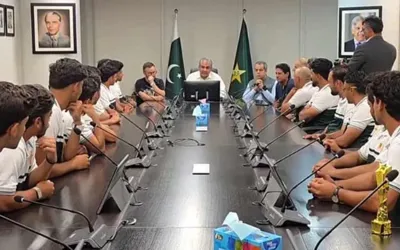
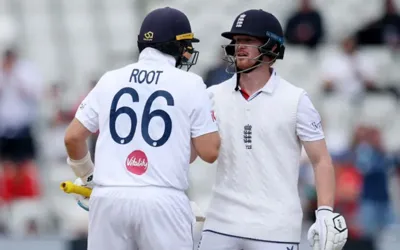
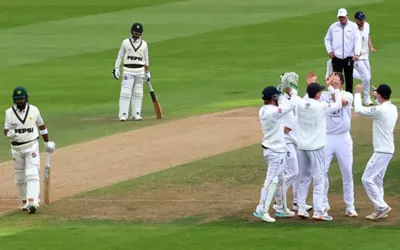
Pakistan’s Test series defeat against England was neither unexpected nor the first time the national team has suffered such a setback. What made this series particularly disturbing, however, was the manner in which Pakistan played.
The team faced unusually harsh criticism, with sections of the English media and former cricketers describing it as one of Pakistan’s worst sides in decades and, in some cases, suggesting that its performance was below the standard of a club team.
Yet there appeared to be little sense of accountability, either from the Pakistan Cricket Board (PCB) or the players. Instead, the response seemed to be that other teams also lose and that there was nothing extraordinary about Pakistan suffering a defeat.
The familiar solution has once again emerged: change the players and move on. It is an old formula in Pakistan cricket, where responsibility is often shifted onto individual players rather than examining the decisions that shaped the team in the first place. But the changes made during this tour only added to the embarrassment.
Where Did Pakistan Go Wrong?
Players ultimately perform on the field, but Pakistan cricket has long struggled with selection issues, institutional interference and frequent changes in team combinations. These factors make it difficult to build a settled side.
When the squad for the England tour was selected, Aqib Javed defended it as the best group of players available. However, questions were raised even then about the inclusion of players such as Imam-ul-Haq, Khurram Shahzad and Ali Usman, particularly because of concerns over their recent form.
Those questions were not adequately addressed
The appointment and role of the coaching staff also created uncertainty. Sarfaraz Ahmed was moved from coaching at the junior level into the national setup, but the transition appeared poorly managed. His previous association with several players also raised questions about the dressing-room environment.
Perhaps the most controversial decision was to change the coach during the tour. Changing the coaching setup in the middle of an important Test series was an extraordinary decision and invited criticism. The subsequent decision to make sweeping changes to the playing group only compounded the uncertainty.
The Controversial Selection of Saim Ayub
The selection of Saim Ayub became another major talking point.
After Imam-ul-Haq was sent home following the Lord’s Test, the PCB brought Ayub back from the Caribbean, where he had been playing franchise cricket. Critics questioned whether a player with limited recent first-class exposure should have been immediately drafted into a demanding Test series.
Ayub has played only a handful of first-class matches in recent years and has spent much of his time in franchise cricket. The decision to use him in Test cricket, therefore, raised legitimate questions about preparation and suitability for the longest format.
With Shan Masood and Abdullah Shafique available as potential opening options, selectors needed to explain why Ayub was considered the better choice.
Pakistan’s Batting Collapse
Pakistan’s batting throughout the series often gave the impression that the players were desperate to score quickly rather than willing to occupy the crease and build innings.
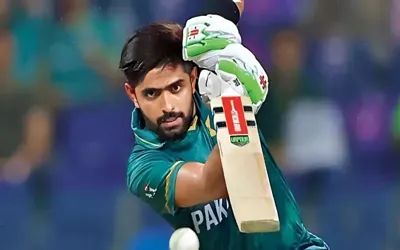
The opening combination was already unsettled, but the middle order failed to provide stability either. Babar Azam and Saud Shakeel repeatedly produced dismissals that were difficult to understand from experienced Test batters who have spent years playing international cricket.
There appeared to be a lack of planning and homework. Once the ball began coming onto the bat, players frequently attempted high-risk shots and threw away their wickets.
Abdullah Shafique, despite receiving praise from sections of the English media before the series, struggled badly with the bat. Shan Masood produced some useful innings but failed to turn them into match-winning contributions.
The selection of some less experienced players also raised eyebrows. Critics questioned why certain players were preferred over alternatives such as Rohail Nazir and Saad Baig, particularly when the latter has a reputation as a capable batter.
The introduction of new Test players without a clear long-term strategy only reinforced the impression that Pakistan was experimenting rather than building a settled side.
Throughout the series, there was also little evidence of complete agreement between the captain and team management. Questions over squad selection reportedly persisted behind the scenes, adding to the uncertainty surrounding the team.
Bowling Depended Heavily on Mohammad Abbas
Pakistan’s bowling attack was also inconsistent.
If Mohammad Abbas is taken out of the equation, the overall performance of the attack was far below the standard expected at Test level. Mohammad Ali and Khurram Shahzad failed to make the most of conditions that should have offered assistance to seam bowlers.
In the final Test, debutant Razaullah showed promise, but much of the responsibility continued to rest on Abbas.
The experienced seamer was arguably Pakistan’s most reliable bowler throughout the series. His late movement and control repeatedly troubled England’s batters and demonstrated why experience and consistency remain so valuable in Test cricket.
Controversies Overshadowed the Tour
As has often happened with Pakistan cricket, the tour was also surrounded by controversy.
Mohammad Rizwan and Imam-ul-Haq were reportedly sent home on disciplinary grounds. Various reports and rumors circulated about disagreements involving Rizwan, the coaching staff and the PCB. Some reports even linked his absence to his religious activities, although such claims remain unsubstantiated and have been denied.
The fact that both players were sent back in unusual circumstances, followed by reports that mobile phones had been taken into custody, fueled speculation on social media and in the Indian media about possible match-fixing.
There is no basis for treating those allegations as established facts while investigations are ongoing. However, the PCB's handling and communication of the matter left considerable room for speculation and further damaged the team's image.
The controversy surrounding Imam's withdrawal from the Lord’s Test also attracted considerable criticism. His decision to leave the match because of an injury was questioned by commentators, with some suggesting that the explanation did not appear convincing.
Another puzzling episode involved Babar Azam and Salman Ali Agha. Babar missed the first Test because of an injury, with Salman taking over as captain. Salman was then left out of the next Test and subsequently removed from the tour altogether.
Such abrupt decisions inevitably raise questions about the consistency and transparency of the selection process.
Razaullah: The Bright Spot of the Series
Amid the disappointment, Pakistan did discover a promising talent in Razaullah, who made his Test debut in the Edgbaston match.
The young fast bowler initially impressed with his pace and aggression before producing a fearless batting display in the second innings. His remarkable 81-run innings forced England to bat again and gave Pakistan a fighting chance.
Razaullah attacked England’s bowlers with extraordinary confidence, hitting sixes against an attack that had troubled Pakistan’s top order throughout the series.
His batting was unconventional and sometimes appeared to disregard traditional Test-match principles, but the enthusiasm and fearlessness were impossible to ignore.
There are signs that Razaullah could develop into a useful all-rounder. However, Pakistan must be careful not to compromise his bowling development. His greatest potential may ultimately lie in his ability to become a high-quality fast bowler.
The Real Accountability Question
There may be resignations following Pakistan’s humiliating series defeat, but the bigger question is whether the PCB will examine the decisions that led to the collapse rather than simply changing a few players.
Aqib Javed has been at the center of many of the selection and team-management decisions, yet there has been little public indication of accountability at the senior level.
His official responsibilities include high-performance matters, but his involvement in the national team has remained substantial. This has raised questions about the distribution of authority within the PCB and whether too many decisions are being concentrated in too few hands.
The PCB has considerable resources, yet Pakistan continues to struggle to produce a settled batting lineup and a consistently strong bowling attack. That suggests the problem goes beyond individual players.
The England series should therefore not be treated simply as another defeat requiring another round of personnel changes.
The real question is whether the PCB chairman and senior management will conduct a serious review of the selection process, coaching decisions, team management and accountability mechanisms.
Will Pakistan cricket learn from this humiliating series defeat, or will the controversy fade away as soon as the next series begins?
That is the test facing the PCB now and changing a few players will not be enough to pass it.