KARACHI: Sindh Environment Secretary Faisal Ahmed Uqaili has said the provincial government will strengthen the environmental management system to address pollution at its source while providing greater facilitation and technical support to the industrial sector.
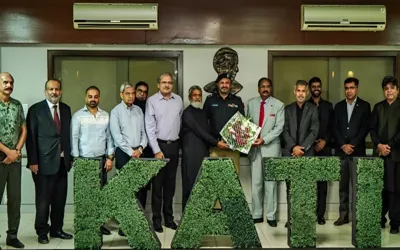
Speaking to industrialists at the Korangi Association of Trade and Industry (KATI), Uqaili said measures were being taken to improve coordination between the Sindh Environmental Protection Agency (SEPA) and industry, including the appointment of a focal person to handle complaints.
He said a dedicated WhatsApp group would also be established to improve communication between SEPA and KATI.
Uqaili said environmental projects would be pursued under the public-private partnership model, with efforts to complete them within stipulated timelines.
He proposed a committee comprising two representatives each from SEPA and KATI to coordinate and monitor the projects.
The secretary said his department had received six projects for implementation under the PPP model. Workshops and seminars would also be organized to improve coordination and raise awareness about environmental issues and carbon financing.
KATI President Muhammad Ikram Rajput said industrialists recognized the importance of controlling pollution and protecting the environment but needed practical guidance, reasonable timeframes, technical assistance and effective coordination with regulatory authorities to comply with environmental laws.
He said most industries in Korangi were export-oriented and already complied with Pakistani and international environmental standards to meet the requirements of overseas buyers and obtain necessary certifications.
Rajput said industries should receive technical guidance, awareness and monitoring before enforcement action, along with clearly defined timelines to install required environmental systems.
He said wastewater treatment plants had not been established in the Korangi Industrial Area despite government assurances, although several major industrial units had installed treatment facilities on their own.
The KATI president identified the cottage industry as a major challenge because many smaller businesses lacked the financial resources required to meet international environmental standards.
He called for coordinated mechanisms to establish individual or shared wastewater treatment plants where collective facilities would be technically and financially feasible.
KATI Deputy Patron-in-Chief Zubair Chhaya said SEPA should act not only as a regulator but also as a guide and facilitator for industry.
He said the Combined Effluent Treatment Plant system had been introduced nearly two decades ago but had yet to become fully operational.
Chhaya also called for greater attention to vehicular emissions, saying they accounted for an estimated 75% to 80% of air pollution, while industrial emissions contributed about 20% to 25%, according to estimates cited by him.
He called for a balanced approach to environmental regulation and said inspections should, where legally and practically possible, be conducted through coordination with industry representatives to minimize disruption to factory operations.
Chhaya also proposed a one-window system for environmental permits, approvals and no-objection certificates to reduce delays and improve transparency.
He said industrialists were not seeking relaxation of environmental standards but wanted a transparent, predictable and collaborative regulatory system that would allow environmental protection and industrial development to progress together.
Saleem-uz-Zaman, chairman of KATI’s Standing Committee on Health, Safety and Environment, said environmental protection could not be compromised but called for more practical mechanisms to improve compliance.
He proposed a long-term environmental management plan for industrial areas and urged the government to fully digitize SEPA.
According to Saleem-uz-Zaman, digitization could improve transparency, record management, inspections, approvals, monitoring and communication between the regulator and industry while reducing delays.