A fresh report of an attack on a vessel in the Strait of Hormuz emerged Sunday, deepening fears over Middle East oil supplies just as President Donald Trump predicted the Iran war would wind down after November's midterm elections and BRICS leaders gathered in New Delhi to push for de-escalation.
New strike reported in Hormuz
The British navy-affiliated UK Maritime Trade Operations agency said Sunday it had received a report of a projectile striking a ship as it transited the Strait of Hormuz, according to Reuters. The extent of the damage and the condition of the crew were not immediately known.
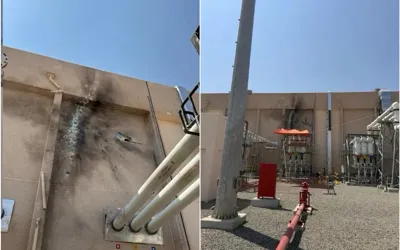
The report came a day after Saudi Arabia said it had temporarily shut its East-West pipeline as a precaution following a drone strike that both Riyadh and Baghdad said had been launched from Iraq, where Iran-backed militias operate. The 745-mile pipeline, which crosses the Arabian Peninsula, has carried 4 million to 5 million barrels of oil a day, roughly 4% to 5% of global supply, serving as a critical alternative route while the Strait of Hormuz has been largely closed because of the war.
Satellite imagery showed smoke rising from a section of the pipeline south of Medina, and Saudi Arabia's Foreign Ministry said the strike caused some injuries and damage still being assessed.
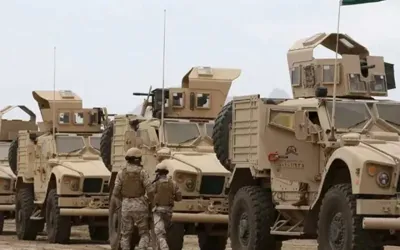
Separately, four Yemeni government sources told Reuters that Houthi forces seized the strategic island of Perim in the Bab el-Mandeb Strait on Friday, a development seen as a major setback for Saudi Arabia and the Yemeni forces it backs. Control of Perim would put Iran-aligned forces in a position to influence shipping at choke points on both sides of the Arabian Peninsula.
There have been no direct U.S.-Iran talks since a June agreement collapsed within weeks, Reuters reported. Ebrahim Azizi, head of the Iranian parliament's national security committee, wrote on X Saturday that dialogue would remain fruitless unless Washington accepted all of Tehran's conditions.
Iran's Foreign Ministry said Friday that Iranian officials would meet Gulf Arab states in Oman on Monday to discuss the future of the Strait of Hormuz, though a senior Iranian official told Reuters on condition of anonymity that expectations for a breakthrough should be tempered.
Trump predicts war's end after midterms
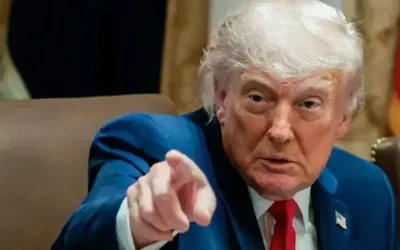
Speaking to reporters Saturday during a visit to Ireland, Trump said he believes the conflict will conclude shortly after the Nov. 3 midterm elections and that oil prices will drop sharply once it does. He suggested Tehran was deliberately prolonging the war to complicate the U.S. political calendar, and said he believes voters have caught on to the strategy.
Trump made the remarks at Farmleigh House in Dublin, where he met with Irish Prime Minister Micheál Martin, and separately at the Deerfield Residence while addressing U.S. Embassy personnel and business leaders. He offered no specific evidence or timetable to support his forecast, and his public confidence has stood in contrast to more cautious assessments described by U.S. officials in private, according to multiple accounts of the trip.
It was the second time in a week Trump had forecast an imminent end to the war; he made similar comments while speaking to reporters in Dallas on Sept. 10.
Oil markets reflected the volatility of the past week. Brent crude settled down 2.8% at $104.61 a barrel Friday, while U.S. West Texas Intermediate fell 2.4% to settle at $100.05, according to Reuters data, both notching sharp weekly gains after Brent topped $100 a barrel for the first time in months. Brent had peaked near $108 a barrel on Thursday, with WTI briefly above $104, before easing after Iranian state media said Tehran would meet Gulf states in Oman to discuss the strait.
BRICS leaders press for restraint
At the BRICS summit in New Delhi, Iran and the United Arab Emirates both signed onto a joint declaration Saturday calling for restraint in the Middle East conflict, a move Reuters described as a signal of diplomatic progress between the two countries, which have found themselves on opposite sides of the war.
The declaration expressed deep concern over the escalating tensions across the Middle East and West Asia, called for maximum restraint and urged all parties to avoid steps that could worsen the situation. It also called for protecting civilians, respecting the sovereignty and territorial integrity of states, and safeguarding global trade, supply chains, energy flows and maritime security.
Iranian President Masoud Pezeshkian met separately with Abu Dhabi Crown Prince Sheikh Khaled bin Mohamed bin Zayed Al Nahyan on the sidelines of the summit, the countries' highest-level meeting since the war began. Abu Dhabi's media office said on X that the two leaders discussed regional and international issues, de-escalation, stability and efforts to advance regional peace, though it did not indicate any resolution had been reached.
Chinese President Xi Jinping, addressing the summit, urged the BRICS bloc to take on a peacemaking role in the Middle East, with state broadcaster CCTV quoting him as saying the war does not serve the interests of the international community and that China would work with fellow BRICS members toward that end. Xi also said Beijing would assume the bloc's rotating chairmanship next year and host the 19th BRICS summit.
Xi separately met Indian Prime Minister Narendra Modi on the sidelines of the gathering, telling him China views its relationship with India from a long-term, strategic perspective, according to state news agency Xinhua.
It was Xi's first visit to India in seven years, a trip analysts said could further a diplomatic thaw between the two countries even though business ties show few signs of improvement. Relations between China and India have been strained since a deadly border clash in 2020, though ties have warmed somewhat since Modi's visit to China last year.
BRICS, originally made up of Brazil, Russia, India, China and South Africa and later expanded to include Egypt, Ethiopia, Indonesia, Iran and the UAE, was founded in 2009 to offer an alternative to a Western-dominated world order. Its members account for more than 40% of the world's population and nearly a quarter of the global economy.
Analysts cautioned that the joint declaration was unlikely to alter the trajectory of the conflict on its own, but said it demonstrated a degree of unity among the bloc's emerging-economy members even as it grapples with divergent interests among states aligned with different sides of the war.