WASHINGTON: Three news organizations banned from the White House are filing a First Amendment lawsuit Monday against the Trump administration, asking a federal judge to restore their journalists' access to cover the president.
CNN, MS NOW and Politico said in a joint statement that they notified the government of the legal action, which was expected to go before a judge in U.S. District Court for the District of Columbia as soon as this week.
"Without notice or process, the White House revoked our journalists' credentials because it objected to our reporting," the outlets said. "Left unchallenged, this threatens press freedom and the public's right to independent journalism free from government interference."
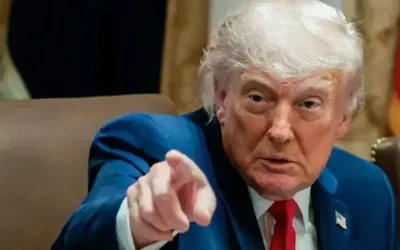
The standoff marks one of the administration's most high-profile attacks on the press to date, with implications extending beyond the three outlets. President Donald Trump said Friday, when he announced the ban, that he might add others to the list.
Reporters for the three organizations are unable to access their workspaces inside the White House. CNN and MS NOW also are blocked from using their television equipment and camera locations on the grounds. CNN was removed Monday from pooled coverage responsibilities shared by major news outlets; it had been scheduled to travel with Trump to New York.
After Trump announced the ban, saying he didn't like "negative stories," the press passes of the three outlets' reporters were deactivated. On Saturday, MS NOW reporter Akayla Gardner, CNN reporter Betsy Klein and Politico reporter Cheyenne Haslett each tried to enter the White House grounds and were denied entry by the Secret Service, which seized their passes.
"If they want to write them, that's fine. I don't have to let them into the people's house," Trump said Friday.
First Amendment and legal experts have widely called the ban unconstitutional, condemning it as abrupt, discriminatory and harmful to the media's ability to cover national issues.
The lawsuit is expected to rely heavily on the vague reasoning Trump gave for revoking access. At least one administration official said in a TV interview Sunday that a 1965 Supreme Court opinion about the government refusing to validate passports for travel to Cuba would support Trump's stance.
The dispute centers on a First Amendment concept known as viewpoint discrimination, since Trump has been explicit about banning outlets over coverage he deems negative. Courts have forbidden viewpoint discrimination and protected journalists' rights in case after case.
The D.C. District Court has several judges who have ruled in favor of press freedom and against the administration for discriminatory policies since Trump took office last year. Federal appellate law in D.C. has held that the White House cannot revoke press credentials without due process, especially when areas of the White House are accessible to the general press and no national security concern exists.
That precedent dates to 1977, when the Secret Service revoked the press pass of Robert Sherrill, a reporter for The Nation. The D.C. Circuit Court of Appeals restored it, ruling that "denial of a White House press pass is violative of the first amendment only if it is based upon the content of the journalist's speech or otherwise discriminates against a class of protected speech."
"Not only newsmen and the publications for which they write, but also the public at large have an interest protected by the first amendment in assuring that restrictions on newsgathering be no more arduous than necessary, and that individual newsmen not be arbitrarily excluded from sources of information," the court wrote.
During Trump's two presidential terms, journalists including Jim Acosta, formerly of CNN, Playboy correspondent Brian Karem and The Associated Press were blocked from White House coverage. Courts largely sided with the journalists in each case based on the 1977 precedent, though they have not said White House press access can be unfettered.
Ted Boutrous, the First Amendment attorney who represented CNN in the Acosta case in 2018, has been retained by the three outlets for Monday's lawsuit.
The news organizations emphasized their coverage will continue regardless of the restrictions.
"CNN's mission to report on the U.S. government will continue regardless of any attempts to restrict physical access to the White House and other government buildings, or any other attempts to impede our journalism," CNN said in a weekend statement.