Wednesday, September 23, 2026
Watch Live
UPDATED
FUEL PRICE
21-SEP-2026
PETROL
-1.70 PKR
Rs. 392.05/ltr
DIESEL
-3.12 PKR
Rs. 418.96/ltr
Headlines
Rising Opioid Use Disorder crisis hits older adults Pakistan develops 'Gender Tracker' to tackle online harassment of women Bahawalpur teen plays 'Breaking Bad', arrested for poisoning father with AI help Trump’s Board of Peace recovery blueprint sets $2.45B six-month plan to rebuild Gaza Rock world in shock as Rose Tattoo frontman 'Angry Anderson' dies at 79 Massive unexploded 'WW2' bomb found near Falmouth Docks Punjab boards announce Intermediate Part-II results 2026 PM appoints Hamza Farrukh as Pakistan Climate Change Authority chair Pakistan Navy, Coast Guards foil smuggling bid in Pishukan Saudi Arabia marks 96th National Day, highlights close Pakistan-Saudi partnership Pindiz owner warns of PSL exit over Rizwan Trump meets Venezuela’s Delcy Rodriguez on UNGA sidelines Shehbaz meets Bill Gates, reaffirms push to eradicate polio ADB forecasts Pakistan growth at 3.7% for FY2027, warns of middle east risks Prime Minister Shehbaz and DPM Dar ramp up diplomacy at UN General Assembly US F-16 crashes near German air base after training exercise Pakistan foils Afghan infiltration, responds to border fire Rising Opioid Use Disorder crisis hits older adults Pakistan develops 'Gender Tracker' to tackle online harassment of women Bahawalpur teen plays 'Breaking Bad', arrested for poisoning father with AI help Trump’s Board of Peace recovery blueprint sets $2.45B six-month plan to rebuild Gaza Rock world in shock as Rose Tattoo frontman 'Angry Anderson' dies at 79 Massive unexploded 'WW2' bomb found near Falmouth Docks Punjab boards announce Intermediate Part-II results 2026 PM appoints Hamza Farrukh as Pakistan Climate Change Authority chair Pakistan Navy, Coast Guards foil smuggling bid in Pishukan Saudi Arabia marks 96th National Day, highlights close Pakistan-Saudi partnership Pindiz owner warns of PSL exit over Rizwan Trump meets Venezuela’s Delcy Rodriguez on UNGA sidelines Shehbaz meets Bill Gates, reaffirms push to eradicate polio ADB forecasts Pakistan growth at 3.7% for FY2027, warns of middle east risks Prime Minister Shehbaz and DPM Dar ramp up diplomacy at UN General Assembly US F-16 crashes near German air base after training exercise Pakistan foils Afghan infiltration, responds to border fire

NIST: AI Cybersecurity Defense Remains Unresolved

NIST: AI Cybersecurity Defense Remains Unresolved

Web Desk January 06, 2024 Add Bol News as a trusted source
  • NIST: AI cybersecurity defense challenges persist.
  • Vulnerabilities include poisoning, abuse, privacy, and evasion attacks.
  • Unresolved theoretical problems highlight the need for better defenses.
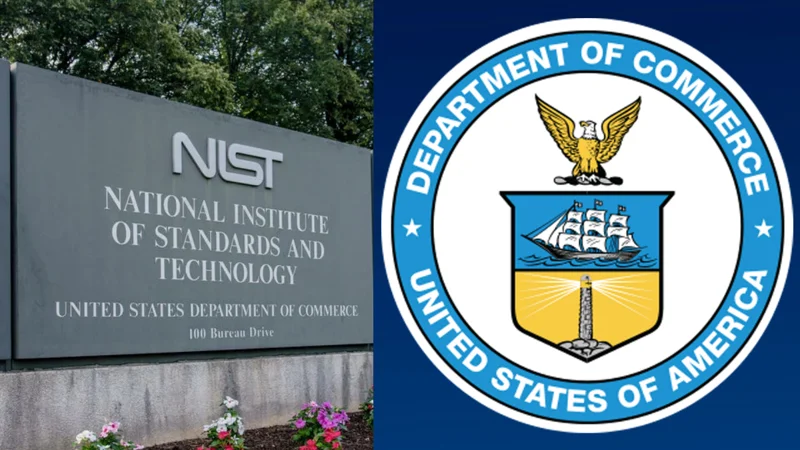
As the world welcomes the new year, the transformative potential of artificial intelligence (AI) takes center stage. However, the U.S. Department of Commerce's National Institute of Standards and Technology (NIST) has raised concerns about the vulnerability of AI systems to cyberattacks, emphasizing that the defense against these threats remains unresolved.

In a recent report titled "Trustworthy and Responsible AI," NIST identifies four types of cyberattacks capable of manipulating the behavior of AI systems and provides key mitigation strategies along with their limitations. The government agency, tasked with developing domestic guidelines for AI model evaluation and red-teaming, reveals that AI systems are increasingly susceptible to attacks from malicious actors capable of evading security measures and triggering data leaks.

NIST computer scientist Apostol Vassilev, one of the report's authors, acknowledges the progress made in AI and machine learning but warns about unresolved theoretical problems in securing AI algorithms. He states, "There are theoretical problems with securing AI algorithms that simply haven’t been solved yet. If anyone says differently, they are selling snake oil."

The report categorizes potential adversarial machine learning attackers into three types: white-box hackers with full knowledge, sandbox hackers with minimal access, and gray-box hackers somewhat informed about an AI system but lacking access to its training data. All three categories pose serious threats, with fraud evolving and presenting new challenges in the AI space.

The NIST report underscores the growing risk as AI becomes more integrated into the connected economy. It highlights that AI systems can malfunction when exposed to untrustworthy data, leading to attacks such as poisoning and abuse. Poisoning attacks involve introducing corrupted data during the training phase, while abuse attacks insert incorrect information into legitimate sources that the AI system absorbs.

The difficulty of making an AI model unlearn a taught behavior adds complexity to AI defense. The report also identifies privacy attacks, aimed at learning sensitive information about the AI or its training data, and evasion attacks, which attempt to alter the system's responses post-deployment.

Despite ongoing efforts, the report emphasizes the lack of foolproof methods for protecting AI and calls for the community to develop better defenses. While acknowledging the challenges, the NIST suggests that adhering to basic cyber hygiene practices can help mitigate potential abuses. The unresolved nature of AI cybersecurity defense signals the need for continued research and collaboration in securing these transformative technologies.

[embedpost slug="/beijing-welcomes-alula-wonder-of-arabia-exhibition/"]

Recommended