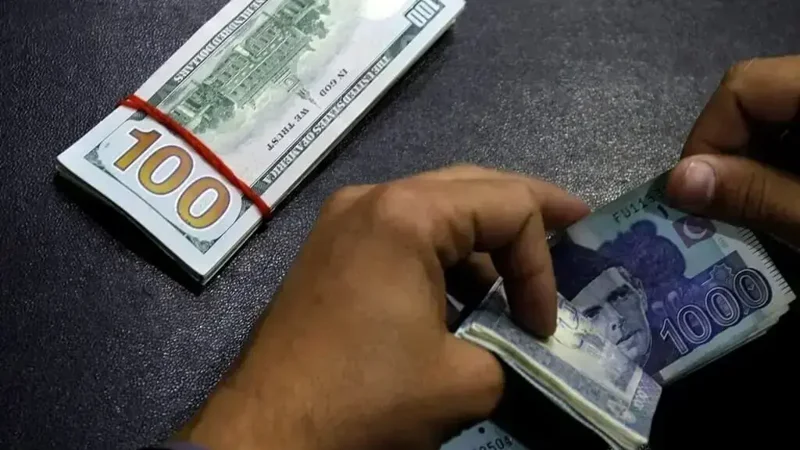
KARACHI: The Pakistani rupee is projected to maintain broad stability near 278 against the U.S. dollar through the end of 2026, according to a revised macroeconomic forecast published by BMI, a research unit of Fitch Solutions.
The updated outlook marks a shift from earlier projections that anticipated currency weakening to 288 rupees per dollar, citing strengthened foreign exchange buffers, tight monetary policy and restored access to international capital markets.
According to BMI's analysis, the immediate threat of a disorderly currency devaluation has receded significantly as Pakistan's foreign exchange reserves reached $17.1 billion as of Aug. 28, 2026, equivalent to approximately 2.6 months of import cover. The reserve accumulation has been bolstered by sustained workers' remittance inflows alongside multilateral support from the International Monetary Fund and bilateral regional partners.
Monetary policy remains a critical stabilizing pillar. The State Bank of Pakistan raised its benchmark policy rate by 100 basis points to 11.5% in April following energy price spikes triggered by the U.S.-Iran war.
With policy rates staying well above pre-2022 crisis levels, the central bank is expected to maintain current interest rates to contain imported inflation without undermining domestic growth.
Furthermore, Pakistan's successful $3 billion dual-tranche Eurobond issuance on Sept. 3, its largest international bond sale to date, has significantly eased short-term external debt refinancing pressures, including $1.7 billion in dollar-denominated debt due later in 2026.
Despite near-term stability, BMI forecasts that policymakers will permit a gradual depreciation of the rupee to approximately 292 per dollar by the end of 2027 to restore international trade competitiveness. The rupee's Real Effective Exchange Rate index reached an eight-year high of 107.9 in July 2026, signaling real exchange rate overvaluation that has weighed on export growth while stimulating import demand.
Pakistan's merchandise trade deficit expanded by 34.6% to $39.6 billion in fiscal year 2025/26. While record remittances have helped cushion the current account, analysts emphasize that gradual currency flexibility in 2027 will be necessary to support export-oriented industries.
However, BMI cautioned that risks remain tilted toward an earlier currency adjustment if global energy shocks persist, particularly with Brent crude trading near $100 per barrel amid ongoing Persian Gulf geopolitical tensions.