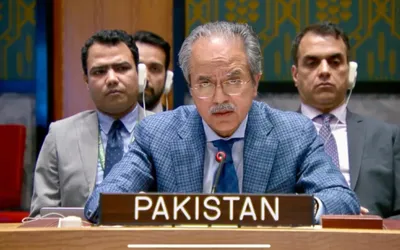
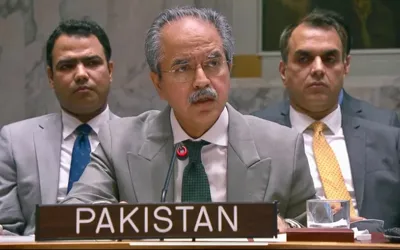
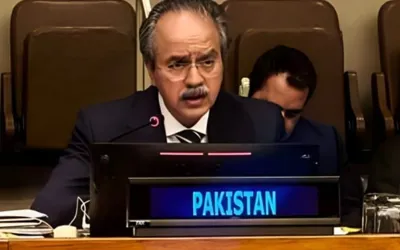
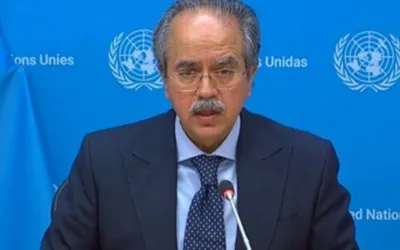
Pakistan has called for an immediate halt to military aggression and renewed diplomatic efforts to prevent further instability in the Gulf, as Ambassador Syed Haider Shah reaffirmed Pakistan's support for its Arab allies during a United Nations Security Council (UNSC) meeting on escalating Middle East tensions.
Speaking at the Security Council session, Pakistan's permanent representative to the UN urged all parties to respect national sovereignty, protect civilian populations and safeguard commercial shipping routes. He also stressed the need to end military provocations and unlawful attacks across the region.
Haider Shah voiced serious concerns over rising tensions and their potential consequences for the security of Gulf nations and the wider Middle East.
Reaffirming Pakistan's longstanding relations with Gulf countries, he described their security and economic prosperity as critically important to Pakistan.
He strongly condemned attacks targeting members of the Gulf Cooperation Council (GCC) and expressed Pakistan's complete solidarity with their governments and populations.
The Pakistani envoy also denounced attacks and threats by Houthi militants against Saudi Arabia, particularly those targeting civilian facilities and vessels involved in legitimate commercial activities.
He reiterated Pakistan's firm support for the kingdom's sovereignty, territorial integrity and national security. Haider Shah emphasized that targeting civilian infrastructure, including airports and energy facilities, was unacceptable and threatened regional stability.
Addressing maritime security concerns, he also highlighted the strategic significance of the Strait of Hormuz and Bab el-Mandeb, warning that threats to these critical waterways could endanger sailors, interrupt international trade and worsen global energy and food shortages.
He called for the protection of maritime navigation rights, merchant vessels and their crews, while urging the restoration of regular shipping operations and uninterrupted humanitarian deliveries.
Haider Shah said sustainable regional peace could not be achieved without addressing the underlying causes of conflicts and instability. He advocated establishing a regional security framework built on shared interests, peaceful coexistence and economic cooperation.
The envoy maintained that diplomacy and constructive dialogue remained the most effective ways to resolve disputes. He also reaffirmed Pakistan's willingness to cooperate with friendly nations and international partners to reduce tensions, strengthen maritime security and promote lasting regional and international stability.
Pakistan's diplomatic position comes amid expanding security cooperation with Saudi Arabia. The two countries signed a bilateral defense agreement in September 2025, further strengthening their longstanding military relationship.
In August 2026, Pakistan, Saudi Arabia and Turkiye signed the Makkah Joint Defense Agreement (MJDA), creating a three-country security partnership.
Under the agreement, an armed attack against any one of the three signatories would be considered an attack against all, reflecting their commitment to collective defense and regional security.