Tuesday, November 3, 2026
Watch Live
UPDATED
FUEL PRICE
03-NOV-2026
PETROL
▼ -3.40 PKR
Rs. 374.51/ltr
DIESEL
▼ -7.76 PKR
Rs. 395.20/ltr
Headlines
US midterms put Trump’s political standing to the test Federal govt announces reduction in petroleum prices Cyberattack affects dozens of supermarkets across Europe Simple egg white face mask for your skincare routine 'Meer-e-Karwan Tum Ho' conference highlights climate challenges Major tech companies resist Trump's latest tariff push against Vietnam Netflix crime thriller 'Collision Course' tops global charts after release Field Marshal Asim Munir, Liu Haixing discuss bilateral ties at GHQ Sindh bans CNG, LPG cylinders in school vans Bird flu outbreak spreads across US poultry farms, infects 1.32m birds Pakistan fined 5% of match fees for slow over-rate in tri-nation final Pakistan to deregulate LPG pricing, add targeted subsidies Pakistan explores tokenizing Eurobond debt, Finance Minister says Karachi to get first mechanical garbage transfer system Pakistan bound LNG carrier attacked near Strait of Hormuz despite Iranian clearance US consortium proposes $4.4 billion LNG project in Pakistan US midterms put Trump’s political standing to the test Federal govt announces reduction in petroleum prices Cyberattack affects dozens of supermarkets across Europe Simple egg white face mask for your skincare routine 'Meer-e-Karwan Tum Ho' conference highlights climate challenges Major tech companies resist Trump's latest tariff push against Vietnam Netflix crime thriller 'Collision Course' tops global charts after release Field Marshal Asim Munir, Liu Haixing discuss bilateral ties at GHQ Sindh bans CNG, LPG cylinders in school vans Bird flu outbreak spreads across US poultry farms, infects 1.32m birds Pakistan fined 5% of match fees for slow over-rate in tri-nation final Pakistan to deregulate LPG pricing, add targeted subsidies Pakistan explores tokenizing Eurobond debt, Finance Minister says Karachi to get first mechanical garbage transfer system Pakistan bound LNG carrier attacked near Strait of Hormuz despite Iranian clearance US consortium proposes $4.4 billion LNG project in Pakistan

Global temperatures likely to exceed 1.5 C limit over next five years, UN agency warns

Global temperatures likely to exceed 1.5 C limit over next five years, UN agency warns

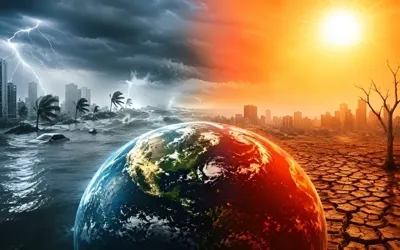
UNITED NATIONS: A new report by the World Meteorological Organization (WMO), a UN agency based in Geneva, warns that global temperatures are likely to keep rising, with an 80% chance that at least one year between now and 2029 will be even hotter than previous records.

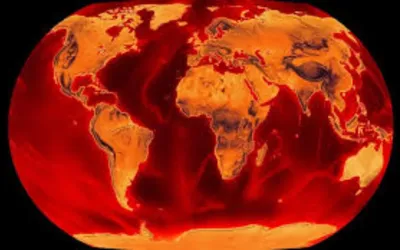
According to the Global Annual to Decadal Climate Update, the planet is expected to experience average temperatures between 1.2°C and 1.9°C above pre-industrial levels (1850–1900) over the next five years.

In 2024, the WMO estimated that the global average temperature was already 1.34°C to 1.41°C higher than pre-industrial levels. Looking ahead, the organization projects that the 20-year average warming from 2015 to 2034 will be around 1.44°C above that historical baseline.

The report also highlights a concerning 86% probability that global average temperatures will surpass 1.5°C above pre-industrial levels in at least one of the next five years, and a 1% chance that a year could exceed 2°C of warming.

There is a 70 per cent chance that the five-year average itself will exceed this 1.5 degree threshold.

The WMO stressed that the 1.5°C Paris Agreement target refers to long-term averages over 20 years, meaning its threshold has not been breached quite yet.

However, these near-term spikes are warning signs of an accelerating climate crisis.

The forecast also highlights regional precipitation impacts, including wetter-than-average conditions expected in the African Sahel, northern Europe, and South Asia. Conversely, the Amazon region could see continued drought.

The situation is even more catastrophic in the Arctic than in the rest of the world. The average Arctic temperature over the next five winters (November to March) is expected to be 2.4°C warmer than the 1991–2020 average, more than three and a half times the increase in the global average temperature.

Sea ice is expected to keep shrinking, particularly in the Barents, Bering, and Okhotsk Seas, contributing to rising sea levels and disrupted weather patterns worldwide.

As the world enters this critical window, the UN agency urged climate action to prevent even more dangerous warming in the decades ahead and keep long-term warming below the 1.5°C limit.


Recommended