ABU DHABI: Gulf nations cannot rely exclusively on the United States and other international partners for their security and must develop greater self-reliance, Qatar’s foreign ministry spokesman said Monday, as the region remains mired in a protracted conflict between Washington and Tehran.
Speaking at the Hili Forum in Abu Dhabi, spokesman Majed bin Mohammed Al-Ansari said that while the strategic alliance with the U.S. remains critical, it is insufficient to guarantee long-term stability for the Gulf states.
“We need to realize in the Gulf that having international forces in the region, having a strategic alliance with the United States, is very important, but is not enough,” Al-Ansari told the gathering. “Self-sufficiency when it comes to security is the only way forward. Yes, we need our partners. Yes, we need our allies. But we cannot depend on them alone for our security.”
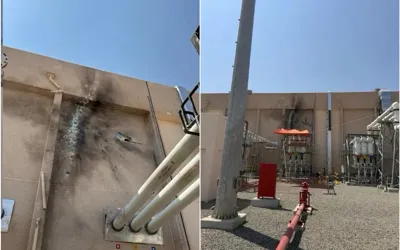
Qatar, a small but gas-rich nation that hosts the largest U.S. military base in the Middle East, has been a key mediator in the ongoing US-Iran war. The country has sustained heavy Iranian attacks, particularly on its energy infrastructure, placing it at the center of the regional conflict.
After six months of fighting, the U.S. and Iran remain at a stalemate. Iran has disrupted shipping through the strategic Strait of Hormuz, while the U.S. has pressed a counter-blockade of Iranian ports. Last month, Qatar’s Prime Minister Sheikh Mohammed bin Abdulrahman Al Thani traveled to Tehran as part of ongoing mediation efforts, following talks between Iran and Oman on a temporary shipping corridor and mine-clearing operations.
UAE Signals Willingness to Rebuild Trust with Iran
In a separate address at the same forum, a senior UAE official acknowledged that rebuilding trust with Iran would be difficult but necessary, offering an apparent olive branch after months of Iranian strikes on Gulf territories.
Anwar Gargash, diplomatic adviser to the UAE President, said Gulf countries had failed to unite collectively against the Iranian threat during the war. He called for dialogue with Tehran to move beyond transactional issues and address deeper strategic questions, including security, non-interference, freedom of navigation and economic cooperation.
“Trust is the mountain we will have to climb, and there is something worth climbing towards,” Gargash said. “Our dialogue with Iran should be ambitious.”
The UAE, which lies across the Gulf from Iran near the Strait of Hormuz, bore the brunt of Tehran’s early attacks, with 3,300 missiles and drones fired at the country. Iran struck America’s Gulf allies after U.S.-Israeli strikes in February decimated the Islamic republic’s leadership.
A détente appeared to take hold after a June ceasefire between the U.S. and Iran, but tankers belonging to state-owned ADNOC have faced repeated attacks in recent weeks. Tehran also said it targeted bases housing U.S. troops in the UAE. The UAE denied one reported missile strike on its air base and declined to comment on subsequent Iranian claims.
Gargash said Gulf countries responded individually with strength and resolve but failed to translate that into a coordinated regional strategy.
“What worked so effectively at the national level did not translate with the same effectiveness to the regional level,” he said.
The comments from both Qatari and Emirati officials underscore growing concern among Gulf states about their dependence on external security guarantees, even as they continue to host U.S. military assets and engage in diplomatic efforts to de-escalate the wider conflict.