Wednesday, September 23, 2026
Watch Live
UPDATED
FUEL PRICE
21-SEP-2026
PETROL
-1.70 PKR
Rs. 392.05/ltr
DIESEL
-3.12 PKR
Rs. 418.96/ltr
Headlines
Rising Opioid Use Disorder crisis hits older adults Pakistan develops 'Gender Tracker' to tackle online harassment of women Bahawalpur teen plays 'Breaking Bad', arrested for poisoning father with AI help Trump’s Board of Peace recovery blueprint sets $2.45B six-month plan to rebuild Gaza Rock world in shock as Rose Tattoo frontman 'Angry Anderson' dies at 79 Massive unexploded 'WW2' bomb found near Falmouth Docks Punjab boards announce Intermediate Part-II results 2026 PM appoints Hamza Farrukh as Pakistan Climate Change Authority chair Pakistan Navy, Coast Guards foil smuggling bid in Pishukan Saudi Arabia marks 96th National Day, highlights close Pakistan-Saudi partnership Pindiz owner warns of PSL exit over Rizwan Trump meets Venezuela’s Delcy Rodriguez on UNGA sidelines Shehbaz meets Bill Gates, reaffirms push to eradicate polio ADB forecasts Pakistan growth at 3.7% for FY2027, warns of middle east risks Prime Minister Shehbaz and DPM Dar ramp up diplomacy at UN General Assembly US F-16 crashes near German air base after training exercise Pakistan foils Afghan infiltration, responds to border fire Rising Opioid Use Disorder crisis hits older adults Pakistan develops 'Gender Tracker' to tackle online harassment of women Bahawalpur teen plays 'Breaking Bad', arrested for poisoning father with AI help Trump’s Board of Peace recovery blueprint sets $2.45B six-month plan to rebuild Gaza Rock world in shock as Rose Tattoo frontman 'Angry Anderson' dies at 79 Massive unexploded 'WW2' bomb found near Falmouth Docks Punjab boards announce Intermediate Part-II results 2026 PM appoints Hamza Farrukh as Pakistan Climate Change Authority chair Pakistan Navy, Coast Guards foil smuggling bid in Pishukan Saudi Arabia marks 96th National Day, highlights close Pakistan-Saudi partnership Pindiz owner warns of PSL exit over Rizwan Trump meets Venezuela’s Delcy Rodriguez on UNGA sidelines Shehbaz meets Bill Gates, reaffirms push to eradicate polio ADB forecasts Pakistan growth at 3.7% for FY2027, warns of middle east risks Prime Minister Shehbaz and DPM Dar ramp up diplomacy at UN General Assembly US F-16 crashes near German air base after training exercise Pakistan foils Afghan infiltration, responds to border fire

Qasim Khan’s GSP+ appeal raises alarm over Pakistan’s economic stability

Critics warn of serious consequences for trade access and global reputation.

Web Desk March 26, 2026 Add Bol News as a trusted source

A storm is brewing over Pakistan’s economic future, as a controversial call targeting one of the country’s most crucial trade lifelines threatens to ignite political turmoil and economic uncertainty at once.

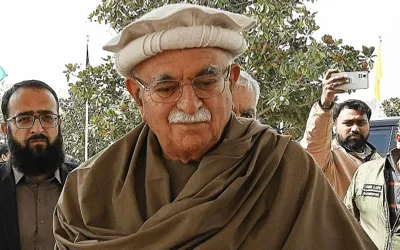
In a highly controversial development, Qasim Khan son of the PTI founder has reportedly called upon the European Union to withdraw Pakistan’s GSP+ status a move that has ignited intense criticism across political and economic circles.

The appeal comes at a particularly fragile moment for Pakistan’s economy, which is striving to regain stability after prolonged financial strain.

Experts warn that any attempt to undermine preferential trade access at this stage could inflict severe damage on the country’s export-driven sectors and broader economic recovery.

GSP+ status remains a cornerstone of Pakistan’s trade framework, providing critical support to key industries, safeguarding millions of livelihoods and securing vital access to European markets.

Analysts argue that targeting such a mechanism for political leverage is not only reckless but potentially devastating in its consequences.

Critics have further condemned the move as a stark example of personal political interests taking precedence over national welfare.

They stress that leveraging international institutions to influence domestic legal or political matters represents a dangerous escalation that crosses established ethical and diplomatic boundaries.

Far from being an expression of democratic dissent, observers describe the development as a calculated and damaging attempt to internationalise internal political disputes.

Such actions, they warn risk undermining Pakistan’s global standing, weakening investor confidence, and placing long-term economic prospects in jeopardy.

Several voices within policy and economic spheres have gone so far as to characterise the move as a form of economic sabotage, asserting that no sovereign state can remain indifferent to efforts that appear to invite external pressure against its own national interests.
Recommended