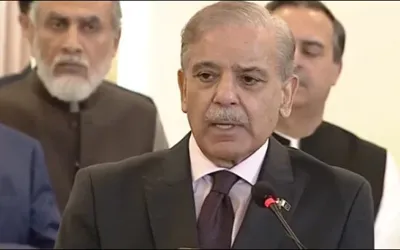
After more than a decade of diplomatic freeze, Pakistan and Bangladesh appear poised for a cautious thaw. Foreign Minister Ishaq Dar’s recent visit to Dhaka — the first by a Pakistani foreign minister in 13 years — signaled a shift in tone and intention. His warm reception and the signing of six bilateral agreements suggest a mutual desire to move past a contentious past and look toward a more cooperative future.
The visit marks a significant moment in bilateral ties that had soured under the leadership of Sheikh Hasina Wajed. Her administration, rooted in the legacy of the 1971 war, maintained a hard line on Islamabad, often invoking the painful memory of Bangladesh’s secession to justify its closeness with India and its distance from Pakistan. But the political landscape in Dhaka is shifting.
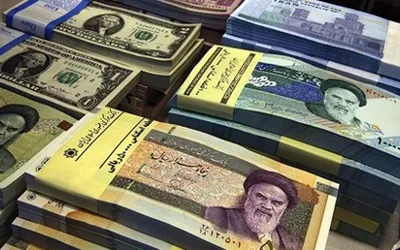
Since the ouster of the Awami League government last year, Bangladesh has witnessed a wave of political and symbolic recalibrations. Statues and institutions linked to Sheikh Mujibur Rahman — long revered as ‘Bangabandhu’ — have come under attack, and his image has been removed from currency notes.
These acts, while controversial, point to a broader reaction against the personality cult fostered by Sheikh Hasina’s government and its harsh crackdown on dissent.
In this changing environment, the interim administration led by Chief Adviser Muhammad Yunus has shown openness to recalibrating relations with Pakistan. Both Yunus and his adviser on foreign affairs have expressed interest in deeper engagement, though the ghosts of 1971 still hover.
Dhaka continues to demand a formal apology and reparations for the war, while Islamabad holds that the matter was effectively settled with Pakistan’s recognition of Bangladesh in 1974 and former President Pervez Musharraf’s expression of “regret” during his 2002 visit.
While this historical dispute remains unresolved, it need not obstruct diplomatic progress. Pakistan argues — with some merit — that healing from 1971 requires mutual understanding rather than permanent hostility. The past should be acknowledged, but not weaponized to hinder the future.
The recent dialogue also touched upon regional cooperation. There was mention of reviving the South Asian Association for Regional Cooperation (Saarc), a once-promising but now largely dormant forum. However, given India’s persistent intransigence, Saarc's revival may be wishful thinking — at least for now.
Instead, a trilateral or multilateral platform involving China, Pakistan, and Bangladesh could offer more realistic and productive collaboration. All three nations enjoy good bilateral relations and could benefit from greater collective engagement, particularly in trade, infrastructure, and people-to-people connectivity.
What’s clear is that Pakistan and Bangladesh share not only a painful history but also a deep cultural and linguistic heritage. As the regional dynamics evolve and new political forces emerge in Dhaka, there is cautious optimism that a more pragmatic and forward-looking relationship can be built. Strengthening trade ties, easing travel restrictions, and fostering academic and cultural exchanges are just some of the avenues through which trust can be rebuilt.
Ultimately, the hope is that the next elected government in Dhaka will prioritize engagement over estrangement. Both Pakistan and Bangladesh have much to gain from a relationship rooted not in the bitterness of the past, but in the possibilities of the future.