FRANKFURT: The European Central Bank raised its key deposit rate by 25 basis points to 2.5% from 2.25% on Thursday, a move widely anticipated by financial markets as rising energy prices push inflation higher.
The decision comes as uncertainty surrounding the U.S.-Iran war and its impact on energy markets clouds the outlook for the ECB’s longer-term monetary policy. Investors are closely watching comments from policymakers for clues about the bank’s next steps.
The ECB projected that core inflation, which excludes energy and food prices, will average 2.5% in 2026, 2.6% in 2027 and 2.3% in 2028.
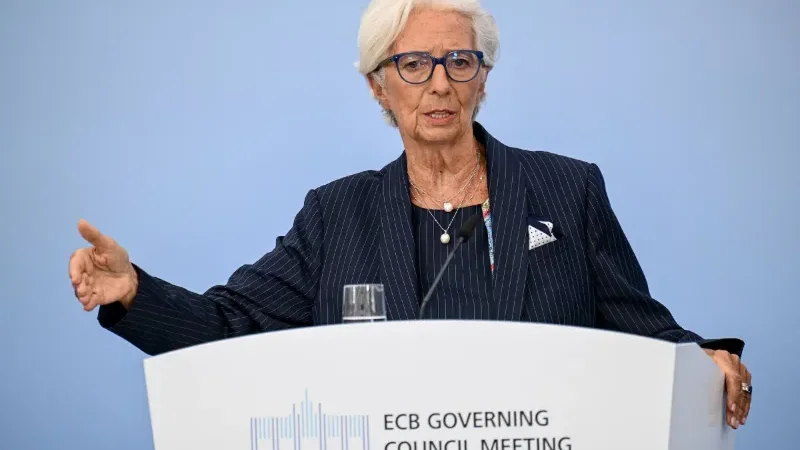
ECB President Christine Lagarde warned that the conflict in the Middle East, along with developments in Russia’s war against Ukraine, could keep headline inflation “well above target” for an extended period. The ECB’s inflation target is 2%.
Speaking at a news conference after the rate decision, Lagarde said the euro zone economy had shown “greater-than-expected resilience,” but warned that the energy price shock and global trade tensions continued to pose risks to economic growth.
“The outlook remains highly uncertain, with risks to the upside for inflation and to the downside for economic growth,” the ECB’s Governing Council said, pointing to a “broad range of outcomes” for growth and inflation depending on the duration and broader effects of the energy shock.
Markets had fully priced in the 25-basis-point increase ahead of Thursday’s meeting, according to LSEG data.
ECB officials have said since the U.S.-Iran war began that monetary policy decisions would be taken on a meeting-by-meeting basis.
The rate increase came days after data showed euro zone inflation accelerated to 3.3% in August, while energy inflation surged to 14.3%.
As a net energy importer, the euro zone has faced renewed inflationary pressure since the Middle East conflict disrupted concerns over commodity shipments through the Strait of Hormuz, sending oil prices sharply higher and increasing market volatility.
Government borrowing costs have also risen significantly in recent weeks, with European bond yields reaching multi-decade highs as escalating tensions in the Middle East prompted investors to anticipate stronger inflation and potentially higher interest rates.
The ECB faces a difficult policy balance as it seeks to contain inflation without further weakening economic growth amid elevated energy costs, trade tensions and geopolitical uncertainty.