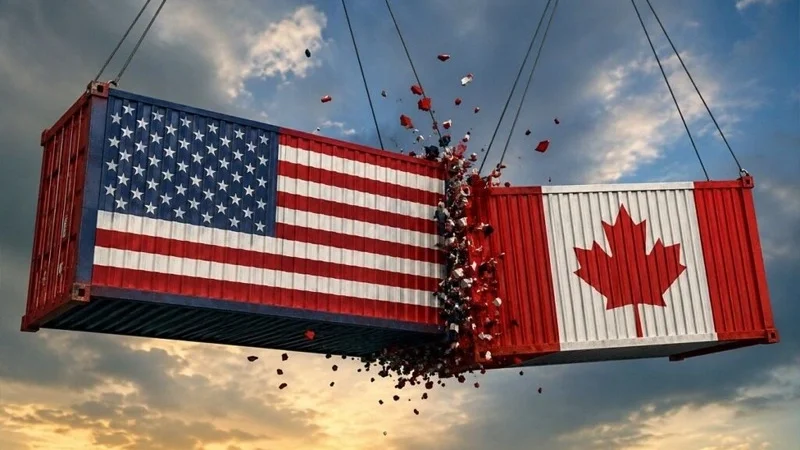
WASHINGTON: Trade tensions between the United States and Canada escalated Tuesday as Washington announced new restrictions on Canadian goods and Ottawa imposed retaliatory tariffs on U.S. products.
The new U.S. measures, set to take effect Sept. 29, target Canadian products including dairy goods, alcoholic beverages and motorbikes. The White House accused Canada of discriminating against U.S. businesses by restricting American products while allowing similar goods from other countries.
Canada’s counter-tariffs, covering products such as steel, clothing and furniture, took effect after midnight Tuesday.
The latest measures mark another escalation in a trade conflict that has strained relations between the two longtime economic partners. Both countries have expressed interest in reaching a trade agreement, but negotiations have not resumed since talks collapsed in late August.
Canadian Prime Minister Mark Carney acknowledged the economic cost of reducing Canada’s dependence on the United States but defended Ottawa’s response.
“There’s always a cost to action. But it doesn’t come close to the cost of standing still,” Carney said in a video address.
The new U.S. restrictions include outright import bans on products such as whey, nonalcoholic beer and certain wine, rum and vodka products. Higher tariffs will apply to other Canadian goods, including cheese, paper, furniture, mattresses, metals, motorboats, golf carts and fishing equipment.
The action follows Washington’s decision last month to impose 50% tariffs on about $20 billion of Canadian goods after trade negotiations stalled. The earlier measures affected industries including furniture, wine, sporting goods and fishing equipment.
The escalating dispute has raised concerns among businesses that higher trade costs could push up prices and reduce demand. Trade expert Deborah Elms of the Hinrich Foundation said the latest restrictions could have a strong impact on Canadian companies that rely on U.S. customers, although early estimates indicate the measures could affect about $1 billion in goods.
Elms said Canada was likely to maintain its current approach while adjusting support measures for affected businesses. She also warned that the language surrounding the latest U.S. actions could make it harder for both sides to return to negotiations.
More than two-thirds of Canada’s exports typically go to the United States, making the country particularly vulnerable to prolonged trade disruptions. Canada is also the United States’ second-largest trading partner after Mexico.
The dispute has prompted some Canadian consumers to boycott U.S. products, with American alcohol disappearing from shelves at some stores as shoppers turn to domestic alternatives.
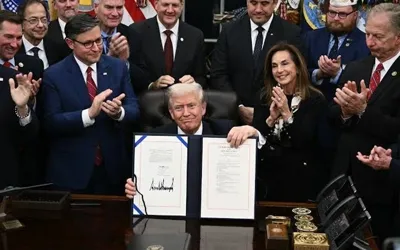
President Donald Trump has repeatedly argued that tariffs can reduce trade imbalances and strengthen U.S. manufacturing. His broader tariff strategy has nevertheless strained relations with several traditional U.S. allies.
The tensions have also spread beyond tariffs. Trump recently warned Canadian aircraft manufacturer Bombardier that it could lose access to the U.S. market unless it moves production to the United States.
The dispute has added to broader friction between the neighbors after Trump ordered Lake Ontario to be renamed Lake America, drawing criticism in Canada and some parts of the United States.
With tariffs and import restrictions expanding, businesses on both sides face greater uncertainty while efforts to restart formal trade negotiations remain stalled.