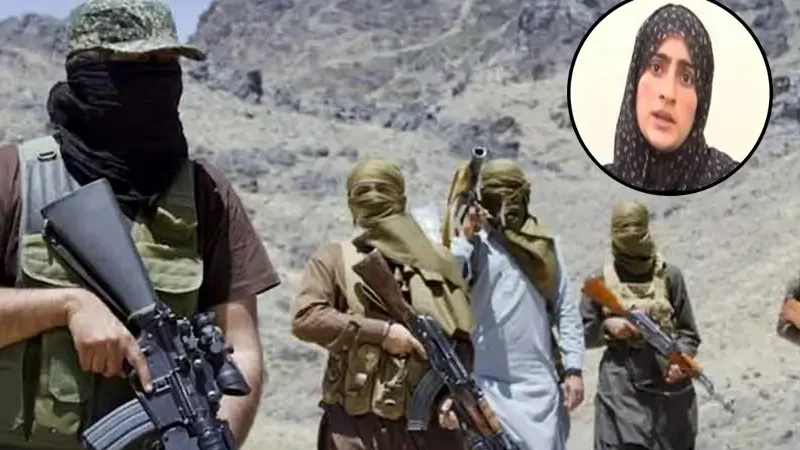
The Rahima Bibi case has exposed an organized network involved in terrorist recruitment and cross-border support. The Government of Balochistan presented her confessional statement during a press briefing in Quetta on April 18, 2026. Rahima Bibi, the wife of Manzoor Ahmed from Dalbandin, confirmed that her husband facilitated a female suicide bomber linked to the Balochistan Liberation Front (BLF), who later carried out an attack on a Frontier Corps (FC) camp in November 2025.
Her statement revealed that suspicious contacts and terrorism-related activities were taking place inside their home during their marriage, showing that such networks have reached domestic environments and are using family systems to operate.
According to Rahima Bibi, the female suicide bomber, Zarina Rafiq, stayed at their house, indicating that residential homes were deliberately used as temporary safe places for individuals later involved in terrorist activities. She also revealed that Zarina Rafiq was later taken to Afghanistan, where she received training before being used in a suicide attack in Pakistan, reinforcing concerns about cross-border support.
The statement further confirmed that Rahima Bibi’s mobile number was used by her husband to communicate with extremist elements, highlighting the misuse of personal identity to hide operational links.
Security assessments show that women are increasingly being exploited by organized networks. According to counter-terrorism reviews, militant groups in Balochistan are targeting women through psychological pressure, coercion, and structured recruitment methods, indicating a shift in terrorist strategies.
Extremist recruitment is carried out through a coordinated system. Vulnerable youth and women are influenced through ideological narratives, while recruitment, training, and deployment are handled by groups such as BLA and BLF once individuals are mentally prepared.
Analysts say that some active platforms, including groups linked to BYC, may promote narratives that influence vulnerable individuals, which are later used by terrorist recruiters.
Security reviews also suggest that failed or disrupted operations are sometimes presented as “missing persons” cases to mislead public opinion when individuals linked to terrorism are detained.
Social vulnerabilities are being used as entry points for recruitment, concealment, and movement. Emotional, social, and family weaknesses are deliberately targeted to support such activities.
Cross-border infrastructure in Afghanistan continues to play a key role in facilitating terrorism in Balochistan and Khyber Pakhtunkhwa. The transfer of individuals for training shows that groups like BLA, BLF, and TTP are still receiving training, logistical support, and planning assistance there.
Former caretaker Prime Minister Anwaar-ul-Haq Kakar stated that terrorist groups are now using a dual strategy that combines violent actions with organized narrative campaigns to create confusion and influence public opinion.
Balochistan Home Department spokesperson Babar Yousafzai said that hostile elements are exploiting women and social weaknesses to strengthen terrorist objectives and harm social harmony.
Officials added that these networks operate through complex, cross-border structures involving recruiters, facilitators, trainers, and handlers working together.
Provincial representatives stressed that such actions go against Baloch cultural values, which emphasize respect, protection, and dignity for women. Religious and ethical principles also reject the exploitation of women for violence or illegal activities.
Authorities confirmed that operations against such networks are ongoing, including intelligence gathering, forensic verification, and legal action to ensure accountability and prevent further exploitation.