ISLAMABAD: The federal government on Saturday, Nov. 7, 2026, unveiled a new automobile policy aimed at making cars more affordable, encouraging electric vehicle (EV) adoption and strengthening Pakistan's local automobile industry.
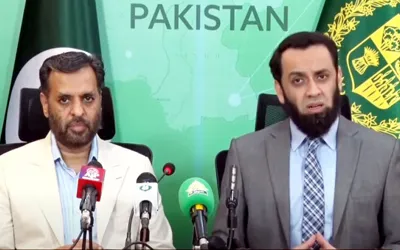
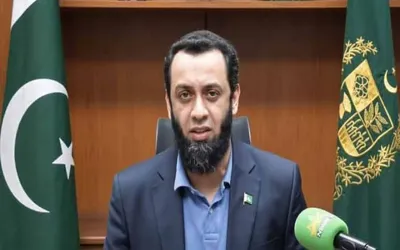
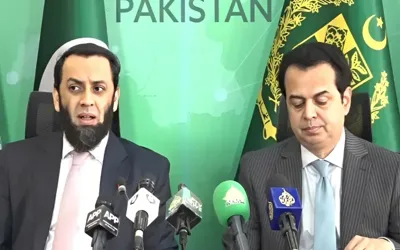
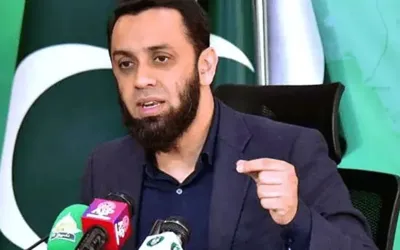
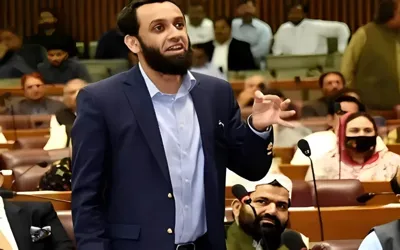
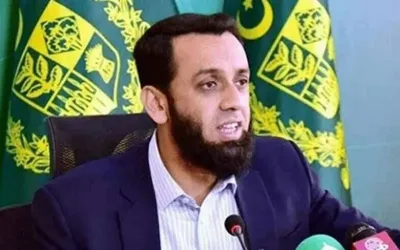
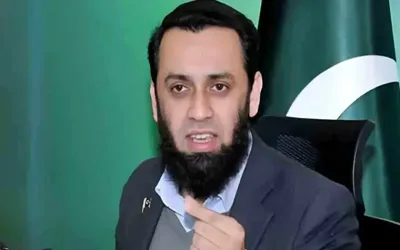
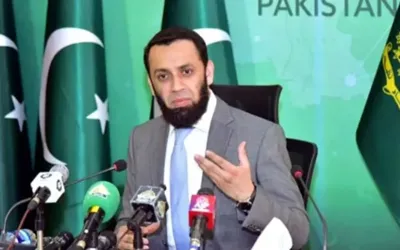
Information Minister Attaullah Tarar and Prime Minister's Adviser on Industries and Production Haroon Akhtar Khan announced the policy during a press conference in Islamabad.
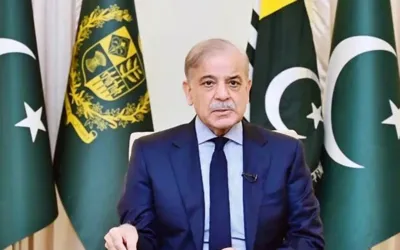
Addressing reporters, Haroon Akhtar said the government had spent considerable time preparing the new policy, adding that Prime Minister Shehbaz Sharif had personally taken a strong interest in its development.
He explained that the policy was based on six key objectives by making vehicles affordable for middle- and lower-income families, increasing exports, strengthening local manufacturing, improving vehicle safety, promoting electric vehicles and ensuring transparency across the automobile sector.
Haroon Akhtar said the government had also introduced a new tariff framework designed to reduce manufacturing expenses and lower the country's dependence on imported raw materials.
He added that these changes would gradually bring down vehicle prices and production costs for automobile manufacturers, although luxury vehicles would not receive the same price benefits.
According to Haroon Akhtar, vehicle prices are expected to decline gradually as the government reduces import duties on completely built units (CBUs), vehicle assembly plants and automobile components.
The tariff reductions will take place annually over the next five years, eventually creating a more competitive taxation structure for the automobile industry.
He also said the government had made local production a compulsory requirement for manufacturers and would introduce specific targets to increase the use of locally produced components.
To encourage exports, the policy introduces a reward-and-penalty system. Manufacturers meeting export requirements will receive a 5% Duty Drawback on Local Taxes and Levies (DLTL), with an additional 10% incentive as their exports grow.
However, companies that fail to meet their assigned targets will face penalties. Haroon Akhtar clarified that manufacturers must achieve both their export and domestic production targets to qualify for the export rebate.
He said the prime minister wanted automobile companies to expand their local operations, establish more manufacturing facilities and create additional employment opportunities in Pakistan.
Vehicle safety is another major part of the new policy. Haroon Akhtar said the government would introduce 45 additional safety requirements based on the United Nations' World Forum for Harmonization of Vehicle Regulations, also known as WP.29.
He explained that bringing vehicles in line with these international standards would improve safety for both locally manufactured and imported used vehicles.
The government also aims to transition 30% of all new vehicle sales to electric power by 2030. However, Haroon Akhtar suggested that the target could be achieved earlier than expected.
He outlined three proposed sales tax rates for electric and hybrid vehicles as 1% for fully electric vehicles, 6% for range-extended electric vehicles and 9% for hybrid electric vehicles.
Haroon Akhtar said these proposed tax rates would require approval from the International Monetary Fund (IMF). He further announced that electric vehicles priced at up to $50,000 would be exempt from capital value tax (CVT), withholding tax and federal excise duty (FED).
However, electric vehicles costing more than $50,000 would be treated as luxury vehicles and charged under the standard tax system. The government also plans to expand the State Bank of Pakistan's vehicle financing program to make electric cars more accessible.
Under the proposed changes, the maximum financing limit for EV purchases would increase from Rs3 million to Rs10 million, while the repayment period would be extended from three years to five years.
In a separate statement on X, Information Minister Attaullah Tarar said the policy was prepared after consultations with industry stakeholders, an examination of technical information and a review of automobile policies adopted by other countries.
He said the government wanted to encourage innovation, increase the value of locally manufactured products and strengthen domestic production to create jobs and expand vehicle exports.
Attaullah Tarar added that promoting electric vehicles would help reduce carbon emissions and Pakistan's dependence on imported oil. The policy also includes incentives to encourage investment in electric vehicle charging stations.
Describing the initiative as an important development for the country's automobile sector, the minister said the government's objective was to provide citizens with affordable, high-quality and environmentally friendly transportation options.