Wednesday, September 23, 2026
Watch Live
UPDATED
FUEL PRICE
21-SEP-2026
PETROL
-1.70 PKR
Rs. 392.05/ltr
DIESEL
-3.12 PKR
Rs. 418.96/ltr
Headlines
Pakistan develops 'Gender Tracker' to tackle online harassment of women Bahawalpur teen plays 'Breaking Bad', arrested for poisoning father with AI help South Sudan’s President Salva Kiir dissolves government before historic vote Trump’s Board of Peace recovery blueprint sets $2.45B six-month plan to rebuild Gaza Rock world in shock as Rose Tattoo frontman 'Angry Anderson' dies at 79 Massive unexploded 'WW2' bomb found near Falmouth Docks Punjab boards announce Intermediate Part-II results 2026 PM appoints Hamza Farrukh as Pakistan Climate Change Authority chair Pakistan Navy, Coast Guards foil smuggling bid in Pishukan Saudi Arabia marks 96th National Day, highlights close Pakistan-Saudi partnership Pindiz owner warns of PSL exit over Rizwan Trump meets Venezuela’s Delcy Rodriguez on UNGA sidelines Shehbaz meets Bill Gates, reaffirms push to eradicate polio ADB forecasts Pakistan growth at 3.7% for FY2027, warns of middle east risks Prime Minister Shehbaz and DPM Dar ramp up diplomacy at UN General Assembly US F-16 crashes near German air base after training exercise Pakistan foils Afghan infiltration, responds to border fire Field Marshal Asim Munir discusses defence ties with France Nazanin Mandi engaged to Michael Gilroy after fairytale proposal Kevin Jonas melts hearts at Danielle’s 40th birthday celebration Y chromosome loss in men may create hidden pathway for cancer, study finds Snapchat turns chat messages into songs with new AI tools for Lens+ users Pakistan develops 'Gender Tracker' to tackle online harassment of women Bahawalpur teen plays 'Breaking Bad', arrested for poisoning father with AI help South Sudan’s President Salva Kiir dissolves government before historic vote Trump’s Board of Peace recovery blueprint sets $2.45B six-month plan to rebuild Gaza Rock world in shock as Rose Tattoo frontman 'Angry Anderson' dies at 79 Massive unexploded 'WW2' bomb found near Falmouth Docks Punjab boards announce Intermediate Part-II results 2026 PM appoints Hamza Farrukh as Pakistan Climate Change Authority chair Pakistan Navy, Coast Guards foil smuggling bid in Pishukan Saudi Arabia marks 96th National Day, highlights close Pakistan-Saudi partnership Pindiz owner warns of PSL exit over Rizwan Trump meets Venezuela’s Delcy Rodriguez on UNGA sidelines Shehbaz meets Bill Gates, reaffirms push to eradicate polio ADB forecasts Pakistan growth at 3.7% for FY2027, warns of middle east risks Prime Minister Shehbaz and DPM Dar ramp up diplomacy at UN General Assembly US F-16 crashes near German air base after training exercise Pakistan foils Afghan infiltration, responds to border fire Field Marshal Asim Munir discusses defence ties with France Nazanin Mandi engaged to Michael Gilroy after fairytale proposal Kevin Jonas melts hearts at Danielle’s 40th birthday celebration Y chromosome loss in men may create hidden pathway for cancer, study finds Snapchat turns chat messages into songs with new AI tools for Lens+ users

Punjab’s welfare bazaar network redefines affordable public relief model

Punjab Sahulat Bazaars Authority has expanded into a large network of permanent.

Afzal Javed March 29, 2026 Add Bol News as a trusted source

LAHORE: The contrasting outcomes of Pakistan’s two major state-backed welfare retail models  the now-defunct Utility Stores Corporation and the expanding Punjab Sahulat Bazaars Authority  are increasingly being viewed as a case study in sustainable public welfare policy.

Earlier in the decade, consumers seeking affordable essential commodities in Lahore had two government-supported options: Utility Stores, which relied heavily on federal subsidies, and Punjab’s model bazaars, which operated without direct subsidy support while offering comparatively lower prices.

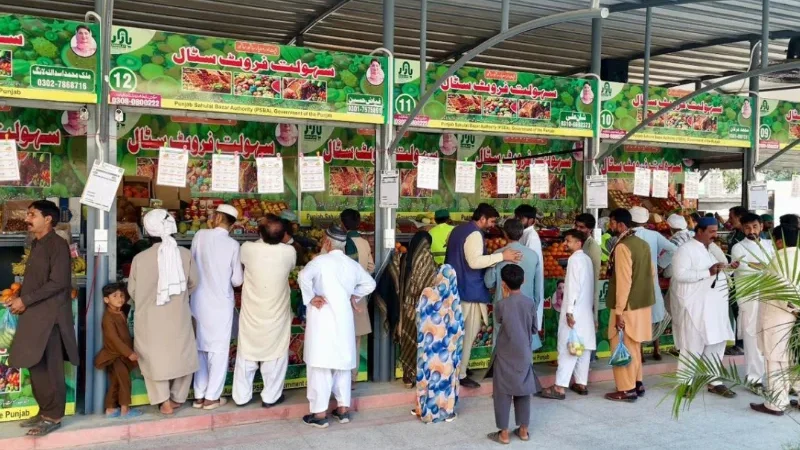
While the federal government eventually shut down the Utility Stores Corporation due to mounting losses and structural inefficiencies, the Punjab Sahulat Bazaars Authority (PSBA) has expanded into a large network of permanent and mobile bazaars serving millions of consumers annually.

Analysts attribute the difference to the contrasting economic models adopted by the two institutions. The Utility Stores Corporation followed a traditional price-subsidy model in which the government purchased goods and sold them below market cost, absorbing financial losses through public funds.

In contrast, PSBA operates on a cost-suppression model designed to reduce procurement and distribution expenses rather than relying on subsidies. The savings are then transferred directly to consumers through lower retail prices.

Economic observers note that subsidy-driven systems become increasingly expensive during periods of inflation, whereas cost-suppression mechanisms can remain financially sustainable while continuing to offer competitive prices.

The PSBA model has been closely associated with Naveed Rafaqat Ahmad, who restructured the original company in 2016 before it was converted into a statutory authority in 2025. He has consistently argued that subsidy-based welfare programs are vulnerable to political and fiscal instability.

However, experts also caution that the PSBA model depends heavily on strict procurement discipline, transparent vendor management, and administrative efficiency. Any weakening of these systems could reduce its price advantage over the open market.

According to an independent assessment conducted by Ipsos earlier this year, households using PSBA facilities save an average of Rs5,170 per month, while prices of 19 essential commodities remain between 2 and 40 percent lower than those in regular markets.

The report also recorded vendor satisfaction at 98 percent and consumer satisfaction at 94 percent, figures analysts say reflect the operational stability of the model.

Policy experts believe the PSBA framework presents a potential third approach in Pakistan’s welfare debate  one that neither depends entirely on subsidies nor leaves consumers fully exposed to market pricing pressures.

They argue that the long-term lesson from the comparison is not that subsidies are inherently ineffective, but that welfare systems designed to survive without permanent fiscal support are more likely to remain sustainable beyond changing political cycles.
Recommended