India is planning to significantly increase its water intake from a major river that flows into Pakistan, in response to the recent Pahalgam incident in Indian Illegally Occupied Jammu and Kashmir.
Delhi suspended its participation in the 1960 Indus Waters Treaty shortly after the Pahalgam incident, accusing Pakistan of carrying out the terror attack. Although Pakistan denied any involvement, Delhi has not reinstated the accord, even after the two nuclear-armed neighbors agreed to a ceasefire last week following their worst clashes in decades.
After suspending India’s participation in the treaty, the Indian Prime Minister directed officials to fast-track the planning and execution of projects on the Chenab, Jhelum, and Indus rivers—three rivers in the Indus system primarily allocated to Pakistan—according to six sources who spoke to Reuters.
Two sources said that officials are discussing a key plan to double the length of the Ranbir Canal on the Chenab River to 120 km. The canal, which runs through India into Pakistan’s agricultural heartland of Punjab, was originally built in the 19th century, well before the treaty was signed.
Four sources said that, according to official discussions and documents they reviewed, an expanded canal would divert 150 cubic meters of water per second, up from the current 40 cubic meters. Experts noted that constructing the expanded canal could take years.
One source said the Indian government began discussing the expansion of the Ranbir Canal last month and has continued the deliberations even after the ceasefire. Until now, no one had reported details of these internal discussions.
The Indian ministries of water and foreign affairs, along with Prime Minister Modi’s office, ignored Reuters’ questions. NHPC, India’s hydropower company that runs many projects in the Indus system, also failed to respond to an email requesting comment.
After India suspended the treaty in April, Islamabad warned that it would treat “any attempt to stop or divert the flow of water belonging to Pakistan” as an “act of war.”
Around 80% of Pakistani farms rely on the Indus system, along with nearly all the country’s hydropower projects that serve its population of approximately 250 million.
Water security expert David Michel from the Washington-based Center for Strategic and International Studies said that if Delhi attempts to build dams, canals, or other infrastructure to withhold or divert significant flows from the Indus system to India, those efforts would take years to materialize.
In early May, India began maintenance work on some Indus projects, causing water at a key receiving point in Pakistan to briefly drop by as much as 90%, giving Pakistan a preview of the pressure it could face from India.
Graphic: Map highlights locations of hydropower projects that India operates in Kashmir:

SUCCESS THREATENED
The Indus system originates near Lake Mansarovar in Tibet, then flows through India’s north and Pakistan’s east and southeast before emptying into the Arabian Sea, passing through some of the world’s most geopolitically tense areas.Experts widely regard the treaty as one of the world’s most successful water-sharing accords, as it has survived several major wars and longstanding tensions between India and Pakistan.
The treaty limits India to building only low-impact hydropower projects on the three rivers allocated to Pakistan. However, Delhi freely utilizes the waters of the Sutlej, Beas, and Ravi tributaries as it chooses.
According to two government documents seen by Reuters and interviews with five people familiar with the matter, India is considering projects that would likely reduce the flow of water into Pakistan from rivers allocated to that country, alongside plans to expand the Ranbir Canal.
A government company prepared an undated note for officials considering irrigation plans, suggesting that water from the Indus, Chenab, and Jhelum rivers “potentially be distributed into rivers” in three northern Indian states.
One source said that officials created the document for discussions with power ministry officials after the April 22 attack, and its details have not been previously reported.
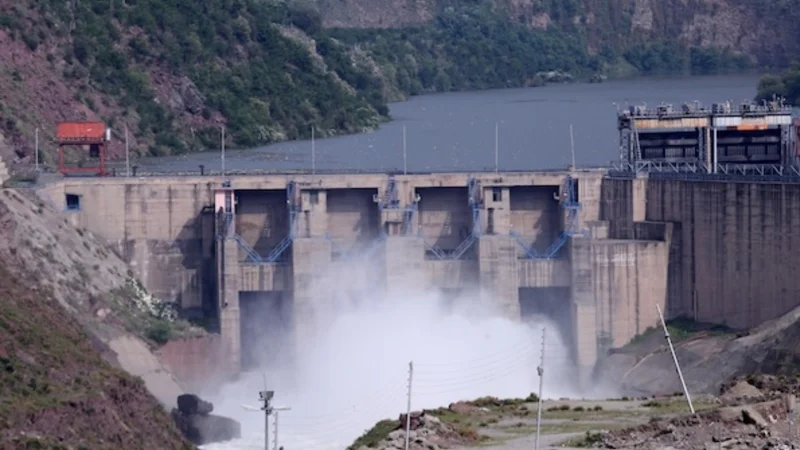
Delhi has created a list of hydropower projects in its Jammu and Kashmir territory aiming to expand capacity to 12,000 megawatts, up from the current 3,360 MW.
The power ministry prepared the list, which Reuters has seen, though it was not dated. A source familiar with the document said government officials created it before the Kashmir incident but are actively discussing it now.
Two sources familiar with the matter said the prospective projects also include dams that can store large volumes of water, marking India’s first such effort in the Indus River system.
According to the power ministry document, India has identified at least five possible storage projects, with four located on tributaries of the Chenab and Jhelum rivers.
Pakistan announced that it is preparing legal action in several international forums, including the World Bank, which facilitated the treaty, as well as the Permanent Court of Arbitration and the International Court of Justice in The Hague.
“Water should not be weaponised,” Pakistan’s Finance Minister Muhammad Aurangzeb told Reuters on Monday. “We don’t even want to consider any scenario which … does not take into account the reinstatement of this treaty.”
[embedpost slug="indian-hc-staff-member-declared-as-persona-non-grata-fo/"]