The International Monetary Fund (IMF) has called on Pakistan to phase out its fuel subsidy programme, saying any future fuel assistance should be limited, targeted and time-bound.
In an interview with an international publication, an IMF spokesperson said Pakistan had been asked to gradually eliminate its fuel support scheme and accommodate any such assistance within the FY27 budget.
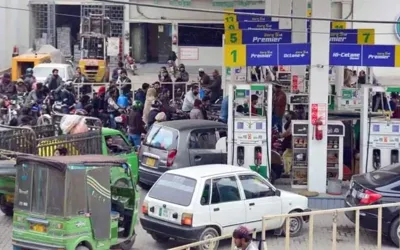
Pakistan introduced fuel subsidies in September for low-income motorcycle users. Under the scheme, motorcycle and rickshaw users receive petrol vouchers worth Rs500 per week.
Moreover, vehicles with engine capacities of up to 800cc are being provided a discount of Rs100 per litre.
The IMF said it had called for the withdrawal of fuel subsidies under the staff-level agreement reached on October 7, as the existing programme had a broad targeting mechanism and should therefore be phased out.
Pakistan is implementing economic recovery measures under the IMF’s $7 billion loan programme, the spokesperson said. Pakistan has also committed to aligning domestic petroleum prices with international market rates.
The spokesperson said the ongoing conflict in the Middle East had emerged as a major challenge for Pakistan, which relies heavily on Gulf countries for oil and gas imports. Higher international oil prices have contributed to rising inflation in the country.
Inflation stood at 9.6 percent in October compared with 10.3 percent in September, according to the spokesperson. However, continued volatility in global oil prices could affect the country’s economic outlook.
The IMF has emphasised the need for Pakistan to maintain macroeconomic stability, along with reforms in state-owned enterprises and improvements in the energy sector.
The IMF Executive Board meeting is expected to take place in December, the spokesperson added.
The Prime Minister’s Fuel Relief Scheme was launched in September to shield lower-income motorists from rising petrol prices amid the US-Iran war. Petrol cost Rs266.17 per litre before the war began on February 28, but it has since neared Rs400 per litre after repeated increases.
The government has approved Rs75 billion ($271 million) for the scheme. Petroleum Minister Ali Pervaiz Malik said the programme would cost Rs25 billion to Rs30 billion a month.
The Prime Minister’s Office said more than Rs28.6 billion had been disbursed so far, while over 15.5 million citizens have registered to avail the benefit.
The government reaffirmed its commitment to the scheme after the IMF staff-level agreement. Deputy Prime Minister Ishaq Dar chaired a meeting on October 9 to review its implementation and targeting. However, the foreign ministry did not say whether the government planned to set an end date.
On the revenue side, petroleum levy collection hit a record Rs1.567 trillion in FY26, up 29 percent from Rs1.22 trillion a year earlier, according to the Finance Ministry. The government has set a petroleum levy target of Rs1.676 trillion for FY27.
The levy has drawn strong opposition. Jamaat-e-Islami called a nationwide strike against the petroleum levy on September 3, which shut hundreds of markets in Karachi with traders backing the call. Moreover, a sit-in outside the Governor House in Karachi had already entered its 17th day by September 1.
Clashes, arson and arrests were reported in Karachi during the strike. Separately, the Pakistan Goods Transport Alliance warned in July that transporters could launch a nationwide strike over the fuel price increases.