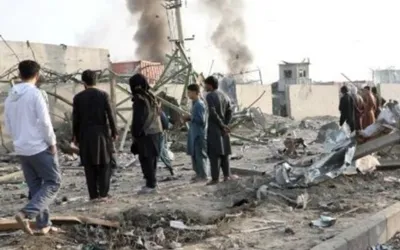
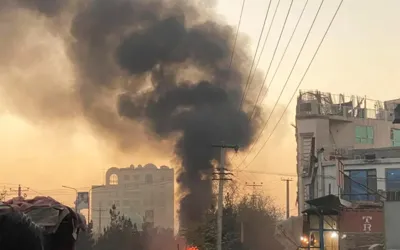
KABUL: Afghanistan has been hit by a third earthquake in less than a week, as the death toll from Sunday’s devastating quake continues to rise.
The latest tremor — a magnitude 6.2 earthquake — struck the country’s south-eastern region on Thursday night, according to data from the Helmholtz Centre for Geosciences in Germany. The full extent of the damage remains unclear as emergency response teams work in difficult conditions.
This follows a magnitude 5.5 aftershock on Tuesday, which caused widespread panic and further disrupted ongoing rescue and recovery efforts. Rockfalls triggered by the aftershock have made many roads impassable, delaying aid delivery to some of the worst-hit areas.
Earlier in the week, a magnitude 6.0 earthquake struck on Sunday, leading to catastrophic loss of life and destruction.
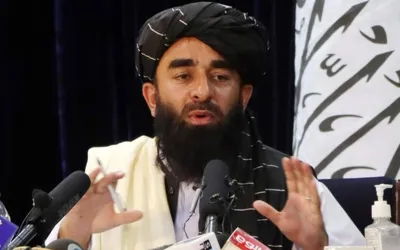
On Thursday, Taliban spokesperson Hamdullah Fitrat confirmed the death toll had risen to 2,205 — up sharply from the initial estimate of 1,400. This makes it one of the deadliest natural disasters in Afghanistan’s recent history.
For years, nearly half of Afghanistan’s population has depended on humanitarian assistance. Even before the quake, more than nine million people were projected to face acute food insecurity by October.
While millions of returnees from Iran and Pakistan had swollen the numbers of displaced and impoverished families. Now, with homes gone, clinics collapsed, and survivors facing hunger, cold, and trauma, children are left dangerously exposed.
What makes this disaster especially deadly is the timing. Just as Afghan families needed more support, international donors slashed aid budgets. Save the Children reports that as of May, 126 of its programmes worldwide were cut due to funding shortfalls, affecting over 10 million people.
In Afghanistan alone, funding cuts closed 14 health clinics and left the rest severely overstretched. “This means fewer places for mothers to give birth safely, fewer vaccines for children, and fewer doctors when disaster strikes,” one field worker explained.
The consequences are now visible on the ground. With health centers shut and medical teams laid off, injured quake victims wait hours or days for treatment.
Children risk dying not only from their wounds, but from preventable diseases, malnutrition, and untreated infections. Families with nothing left may be forced into impossible choices — child labour, early marriage, or selling their few remaining possessions just to survive.
This is not an inevitable tragedy. It is the result of political decisions. Wealthy donor states have pulled back at precisely the moment Afghanistan needed them most, leaving aid agencies underfunded and ill-equipped. The quake should serve as a wake-up call. Restoring humanitarian funding is not charity; it is the bare minimum to prevent an entire generation from being lost.
By October, aid agencies estimate that five million Afghan children — one in five — could face acute hunger. With 420 health centers already closed due to cuts, more than three million people have lost access to care. “The protective systems for children — medical, nutritional, educational, psychosocial — are collapsing right when they are most critical,” warned Save the Children.
Afghanistan’s children are paying the price of the world’s waning attention and shrinking budgets. No child should die because funding faltered. Donors must immediately release emergency aid, commit to sustained child-focused services, and ensure that when disaster strikes — whether earthquake, war, or famine — help arrives in time.
For the children of Afghanistan, survival depends on it.