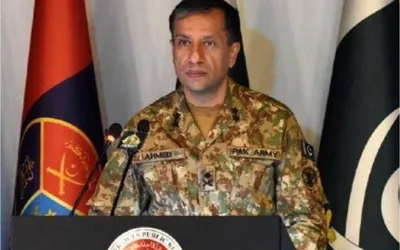
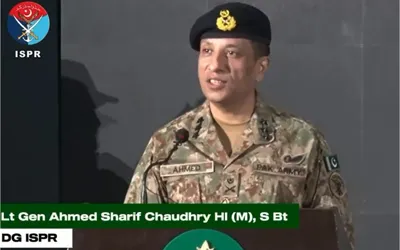
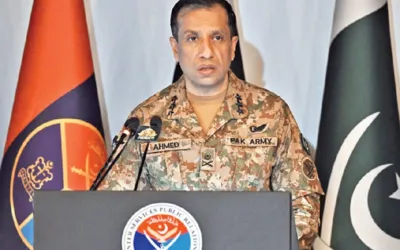
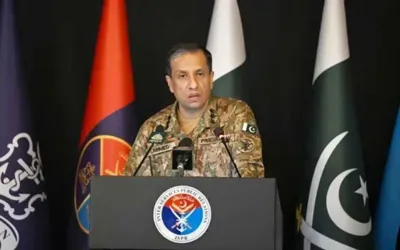
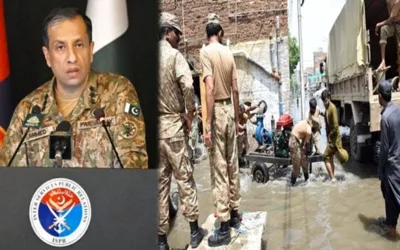
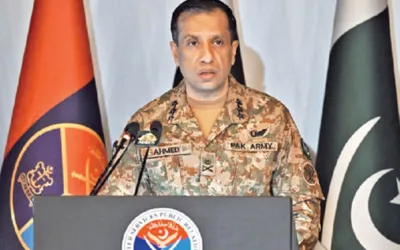
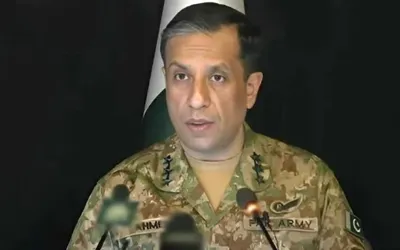
RAWALPINDI: Pakistan's military spokesperson has warned the Afghan Taliban against testing the country's defense capabilities, saying the regime would struggle to withstand the consequences of any military response from Islamabad.
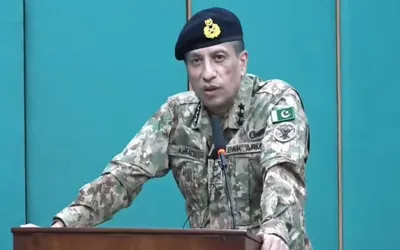
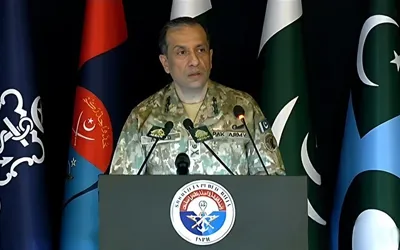
In an interview with Reuters, Director General of Inter-Services Public Relations (ISPR) Lt. Gen. Ahmed Sharif Chaudhry said Pakistan was prepared to counter threats from the Afghan Taliban, including potential drone attacks.
"Whatever they want to send, they can; they may try. We have the capability to take them on," Chaudhry said.
He added that the Afghan Taliban lacked the capacity to absorb the level of retaliation Pakistan could deliver. Addressing concerns about drone technology, Ahmed Sharif Chaudhry said any drone capabilities held by the Afghan Taliban were not developed independently but were supplied by external sponsors.
He also accused India of being the "biggest terror sponsor" threatening Pakistan, that the Afghan Taliban and militant groups operating against Pakistan were acting as Indian proxies.
Referring to the previous conflict with India, Ahmed Sharif Chaudhry claimed that New Delhi had deployed dozens of advanced drones, which Pakistan successfully intercepted. He said the military had since further strengthened its operational capabilities.
Ahmed Sharif Chaudhry said that the Afghan Taliban government of sheltering militant leaders and allowing armed groups to use Afghan territory to launch attacks inside Pakistan.
He said Islamabad was not seeking to isolate Afghanistan and remained willing to engage with Kabul. However, he urged the Taliban authorities to act responsibly and prevent militant groups from operating across the border.
"We only ask that you don't support terrorism inside Pakistan. Stop harboring the terrorist leaders," he said.
The ISPR chief also said that militant groups were receiving weapons and support from Afghanistan. He said Afghan citizens and members of the Taliban regime had also been found among individuals involved in attacks against Pakistan.
"If you do it, then there will be a cost," Ahmed Sharif Chaudhry warned, adding that Pakistan had a clear strategy and the ability to respond.
Rejecting calls to isolate Afghanistan, Ahmed Sharif Chaudhry said the international community and neighboring countries should continue engaging with the Taliban government while pressing it to prevent militant activity.
He described terrorism and drugs as Afghanistan's two major exports, warning that both posed serious threats to regional and international security.
"What Afghanistan is producing right now, it has only two products: terrorism and drugs," he said.
Ahmed Sharif Chaudhry stressed that Pakistan had no intention of deciding how Afghanistan should be governed, saying that responsibility belonged to the Afghan people.
However, he maintained that no country should allow armed groups, militias or mercenaries to operate from its territory.
He warned that the growing use of advanced weapons by non-state actors was creating new security challenges for countries around the world.
Asked whether Pakistan's military used artificial intelligence to identify targets in Afghanistan, Chaudhry declined to share specific operational details.
"I cannot go into specifics about how we are using AI, how we are using quantum technology, how we are using cyber technology, or how we are using multiple other technologies," he said.
However, he confirmed that the military was using a range of advanced technologies to strengthen its defense capabilities. "But we are using all sorts of technologies. We are a technology-savvy army," he added.