RIYADH: Oil prices edged higher on Friday after a Houthi missile strike damaged Riyadh’s tallest skyscraper and reports emerged of tanker explosions in the Strait of Hormuz, though both crude benchmarks remained on track for a third consecutive weekly loss.
Brent crude futures rose 24 cents, or 0.3%, to $92.22 a barrel by 0118 GMT. U.S. West Texas Intermediate (WTI) crude futures for December climbed 19 cents, or 0.2%, to $83.40 a barrel, while the more-active January contract gained 20 cents, or 0.2%, to $82.64.
Despite Friday’s uptick, Brent is set for a 3.5% weekly decline and the December WTI contract faces a 6% drop for the week. Both benchmarks settled little changed on Thursday as crude shipments through the Strait of Hormuz returned to roughly pre-war levels, fueling expectations of a supply surplus.
Still, fresh military escalations revived supply jitters across energy markets.
Concerns over Middle Eastern crude oil supplies have resurfaced due to attacks on Riyadh by the Houthis, prompting buying. Expectations that coordinated production cuts will continue at the OPEC+ meeting later this month are also providing support.
In Riyadh, residents were awoken by a loud boom early Thursday as a Houthi missile struck the PIF Tower, the headquarters of Saudi Arabia’s sovereign wealth fund and the capital's tallest building.
Saudi Arabia’s civil defense said an attack on a tower in Riyadh’s financial center caused material damage across several floors and nearby buildings, though no injuries were reported, according to the state news agency SPA. While the agency did not name the building, an accompanying photograph showed the PIF Tower with blown-out windows across seven to eight floors and bent metal facade panels.
Authorities closed the King Abdullah Financial District to visitors following the strike. It marked the second time in less than two weeks that a Houthi attack damaged a landmark in the financial district, after state oil giant Aramco’s building was hit on Nov. 8.
Three sources familiar with the matter confirmed the PIF Tower was struck by an incoming Houthi missile. The Saudi-led coalition fighting the Yemeni group said it had “dealt with a missile threat” launched toward Riyadh and that debris had fallen.
Saudi Arabia’s Foreign Ministry said the kingdom reserved the right to take “all necessary measures” to defend its sovereignty, citizens and national assets. Civil defense officials issued several danger warnings throughout Thursday before declaring the threat had passed.
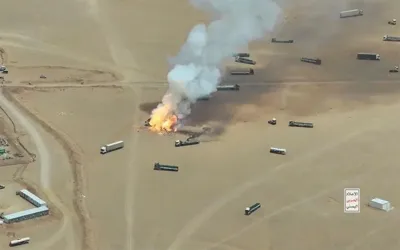
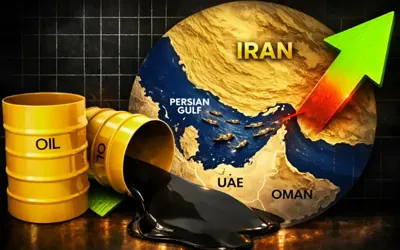
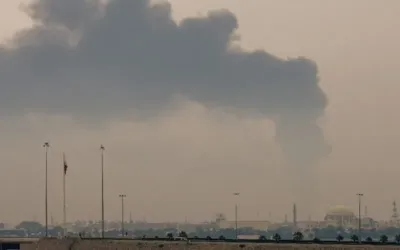
Meanwhile, Iran’s Revolutionary Guards Navy said in a statement carried by state media Thursday that two oil tankers hit naval mines in the Strait of Hormuz, adding that the vessels “exploded” and “are burning.”
The escalations come as the conflict, which reignited in July amid the U.S.-Iran war, continues to test global energy security and Crown Prince Mohammed bin Salman’s economic diversification push.
On the ground in Yemen, Houthi forces have seized swathes of territory from the Saudi-backed government, forcing a major retreat over the weekend. Early Thursday, Houthi-run Saba news agency reported Saudi airstrikes on the Houthi-controlled Yemeni capital of Sanaa, without giving further details.
Amid the widening hostilities, Crown Prince Mohammed met U.S. Central Command chief Adm. Brad Cooper in Riyadh on Wednesday, marking Cooper’s third publicly reported visit to the kingdom since the Yemen fighting resumed. Separately, Saudi Foreign Minister Prince Faisal bin Farhan met retired Lt. Gen. Nauman Mahmood, secretary-general of the Makkah Defence Alliance, in Riyadh on Thursday.
In Pakistan, Pakistan Ulema Council Chairman Hafiz Tahir Mehmood Ashrafi condemned the Houthi strikes on civilian infrastructure in Riyadh and expressed solidarity with Saudi leadership and citizens.
Elsewhere in global energy markets, ministers from OPEC+, the Organization of the Petroleum Exporting Countries and allies including Russia, are scheduled to meet Nov. 29 to decide 2027 output policy.
Supply risks also lingered in Russia, where Ukrainian drone attacks have slashed combined refinery crude processing volumes by 45% since late October, putting Russian crude output at risk of further declines, analysts and traders said.
Over the longer term, the International Energy Agency warned Thursday that the Middle East conflict has triggered the biggest disruption in history to global oil and gas trade, a shock that could cut world oil demand by more than 4% by 2035 if governments accelerate electrification, efficiency and fuel-switching policies.