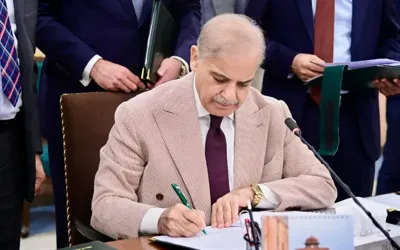
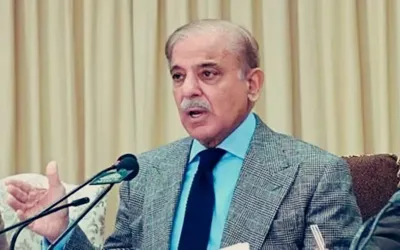
ISLAMABAD: Prime Minister Shehbaz Sharif has approved Pakistan’s new Automotive Industry Development and Export Policy 2026-31, setting a target of increasing vehicle exports to $6 billion over the next five years.
The policy proposes lower tariffs on small electric vehicles (EVs) priced below $15,000 and increasing the EV financing limit from Rs3 million to Rs10 million. The repayment period would also be extended from three to five years.
An automotive development levy will be imposed on vehicles with engine capacities exceeding 1,000cc, according to the policy proposals.
The government has also set a target of increasing auto parts exports to $1.2 billion by fiscal year 2030-31.
Under the proposed framework, automakers will be required to meet mandatory export targets. Companies would receive incentives equivalent to 5% of their export value, with an additional 10% incentive for exports exceeding the previous year’s level.
Companies failing to meet their export targets would face penalties. Manufacturing certificates could be revoked if targets remain unmet for two consecutive years, while incentives could be withdrawn from companies that repeatedly fail to achieve their commitments.
The government expects to collect more than Rs232 billion through the automotive development levy over five years. The revenue would be used to finance export incentives and industrial development programmes.
The policy also proposes funding to upgrade technology used by auto parts manufacturers and establishing a Pakistan Automotive Testing Institute. Funding would be allocated for research, certification and third-party audits in the automotive sector.
Other proposed measures include enforcing international safety standards for locally manufactured and imported vehicles, incorporating consumer protection clauses into automakers’ contracts, conducting third-party audits twice a year and setting new targets for workforce training.
The government aims to enact legislation governing the automotive development levy by December 2026.
The policy will be presented to the federal Cabinet for final approval.