LAHORE: The contrasting outcomes of Pakistan’s two major state-backed welfare retail models the now-defunct Utility Stores Corporation and the expanding Punjab Sahulat Bazaars Authority are increasingly being viewed as a case study in sustainable public welfare policy.
Earlier in the decade, consumers seeking affordable essential commodities in Lahore had two government-supported options: Utility Stores, which relied heavily on federal subsidies, and Punjab’s model bazaars, which operated without direct subsidy support while offering comparatively lower prices.
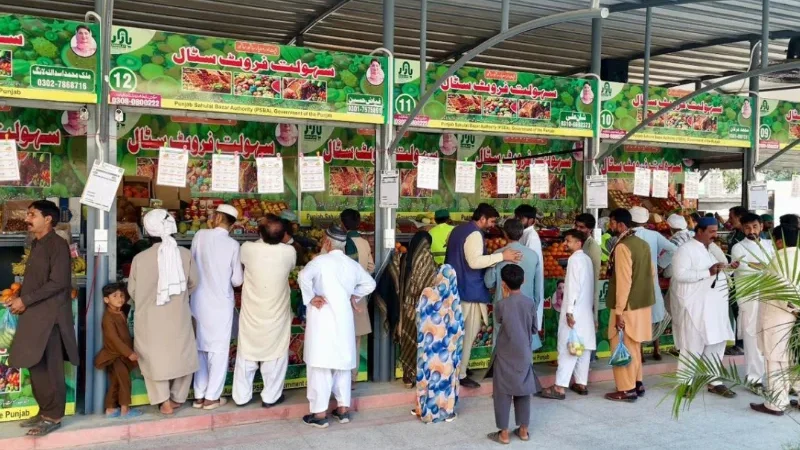
While the federal government eventually shut down the Utility Stores Corporation due to mounting losses and structural inefficiencies, the Punjab Sahulat Bazaars Authority (PSBA) has expanded into a large network of permanent and mobile bazaars serving millions of consumers annually.
Analysts attribute the difference to the contrasting economic models adopted by the two institutions. The Utility Stores Corporation followed a traditional price-subsidy model in which the government purchased goods and sold them below market cost, absorbing financial losses through public funds.
In contrast, PSBA operates on a cost-suppression model designed to reduce procurement and distribution expenses rather than relying on subsidies. The savings are then transferred directly to consumers through lower retail prices.
Economic observers note that subsidy-driven systems become increasingly expensive during periods of inflation, whereas cost-suppression mechanisms can remain financially sustainable while continuing to offer competitive prices.
The PSBA model has been closely associated with Naveed Rafaqat Ahmad, who restructured the original company in 2016 before it was converted into a statutory authority in 2025. He has consistently argued that subsidy-based welfare programs are vulnerable to political and fiscal instability.
However, experts also caution that the PSBA model depends heavily on strict procurement discipline, transparent vendor management, and administrative efficiency. Any weakening of these systems could reduce its price advantage over the open market.
According to an independent assessment conducted by Ipsos earlier this year, households using PSBA facilities save an average of Rs5,170 per month, while prices of 19 essential commodities remain between 2 and 40 percent lower than those in regular markets.
The report also recorded vendor satisfaction at 98 percent and consumer satisfaction at 94 percent, figures analysts say reflect the operational stability of the model.
Policy experts believe the PSBA framework presents a potential third approach in Pakistan’s welfare debate one that neither depends entirely on subsidies nor leaves consumers fully exposed to market pricing pressures.
They argue that the long-term lesson from the comparison is not that subsidies are inherently ineffective, but that welfare systems designed to survive without permanent fiscal support are more likely to remain sustainable beyond changing political cycles.